
In my spiritual care errands, I meet with people living many different tough situations that need some “unpacking” and understanding. These people, most of the time, just need to “take it off” their chest with someone who is willing to listen. Other times, the level of complexity is such that it requires more questions about how they got there.
Just a few weeks ago, one of these people told me that he had held a grudge for so long that he did not know how to get rid of it. That grudge was so strong that it had become debilitating to him and to his mental health. Because his mental health was hurting, the effect on his body was also very hard. Alcohol and substance abuse had taken over and ravaged him to a point that he needed help. The good thing was that he had recognized the need for help and he had sought professional support.
This made me think that some wounds arrive as giants — unmistakable, towering, impossible to ignore. Others arrive small, almost silly, wrapped in an insult or a slight that shouldn’t matter as much as it does. It is often the second kind that undoes us, like in the case I just described. We can rehearse a comeback for hours, replay an unkind remark for days, and let a five-minute conversation reshape our whole week. Recently, I read a story in the Bible’s Old Testament that tells exactly about this problem, and it is one of the most human moments in all of Scripture: a future king, hours away from a massacre, brought low not by an army but by his own wounded pride.
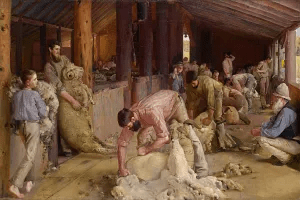
The account is found in 1 Samuel 25. David and his six hundred men were living as fugitives in the wilderness, and for months they had quietly protected the flocks of a wealthy landowner named Nabal, never once helping themselves to what belonged to him. When shearing season came — a traditional time of generosity and feasting — David sent a courteous request for provisions, reminding Nabal of the protection his men had provided. It should have been a simple, friendly exchange. Nabal, whose name, in Hebrew, literally means “fool,” answered instead with contempt, pretending not to know who David was and refusing him anything. The insult landed hard. David, a man who could face Goliath without flinching, ordered his men to strap on their swords. He was riding out to kill Nabal and every male in his household over a rude comment about food.
It’s worth reflecting on that for a moment. This is the same David who had just defeated the greatest warrior in the Philistine army. The giant didn’t break him. A fool’s insult very nearly did. That contrast is the heart of this story: it is so often not the enormous trials of life that undo us, but the small, sharp, personal offenses — the comment we can’t stop replaying, the slight we decide we cannot let pass.
Abigail, Nabal’s wife, changed the outcome. Hearing from a servant what her husband had done and the danger now riding toward her household, she acted immediately, without waiting for permission or building a committee. She loaded donkeys with bread, wine, meat, and cakes, rode out to meet David’s small army alone, and bowed before him. Her speech to David is a masterclass in de-escalation — she took responsibility she did not owe, saying, “Upon me, my lord, upon me let this iniquity be” (1 Samuel 25:24), and she reminded him gently that shedding innocent blood over a personal insult would haunt him for the rest of his life as king. David listened. He praised her judgment, thanked her for stopping him “from avenging myself with mine own hand,” and turned his men around. When Nabal died of what scripture describes as a sudden collapse of health not long after, David and Abigail married.

A soft answer, offered in time, changed the trajectory of a kingdom.
That is the first lesson worth pulling from this story: Proverbs later distills exactly what Abigail modeled — “A soft answer turneth away wrath: but grievous words stir up anger” (Proverbs 15:1). Abigail didn’t defend Nabal’s behavior or pretend the insult hadn’t happened. She simply refused to meet contempt with more contempt, and in doing so gave David room to become his better self instead of his worst one.
There’s also something remarkable in what Abigail did with the blame itself. She had caused none of this, yet she stepped into the gap and absorbed responsibility to bring about peace. That’s intercession — carrying, for a moment, a burden that isn’t yours so someone else doesn’t have to carry the consequences of their worst impulse. Most of us won’t be called to ride out and stop an army, but we practice small versions of this constantly: speaking well of someone who isn’t in the room to defend themselves, praying for a person who is struggling in ways they haven’t asked for help with, or simply staying quiet instead of firing back the clever, cutting remark that would only make things worse.
Abigail’s other gift to David was perspective. She reminded him, in the middle of his rage, of who he actually was and where his life was actually headed — a future king which “the Lord will certainly make my lord a sure house” ahead of him, not a man who needed to stain his hands over an insult from a fool. That’s the quiet danger of unprocessed hurt: it shrinks our field of vision until the offense in front of us feels like the whole story, when it’s really just one paragraph in a much longer one. And underneath all of it sits the theme that runs through the entirety of David’s life — that the battle belongs to the Lord. David didn’t need to avenge himself. Once he stepped back, the situation resolved itself within days, without a drop of blood on his hands.
This same instinct — that letting go of a grievance and trusting a larger justice is worth more than winning the moment — shows up powerfully in the Book of Mormon as well, though in an even more extreme form. In Alma 24, a group of people known as the Anti-Nephi-Lehies had been converted from a violent past and made a covenant with God that they would never again shed blood. When their former allies gathered to attack them, they didn’t merely decline to retaliate — they buried their weapons in the earth as a permanent testimony of the covenant, and vowed that rather than take up arms again, they would sooner give up their own lives. When the attack came, over a thousand of them died without lifting a hand in their own defense, and the account records that they met their deaths in prayer, praising God. It is one of the most radical portraits of letting go of vengeance found anywhere in scripture, and it left such an impression on the attacking army that many of them laid down their own weapons and joined the very people they had come to destroy.
Modern apostles have returned to this same theme again and again, because human nature hasn’t changed since Nabal’s day. President Russell M. Nelson, in his April 2023 address “Peacemakers Needed,” (https://www.churchofjesuschrist.org/study/general-conference/2023/04/47nelson?lang=eng) reminded us that “contention is a choice. Peacemaking is a choice,” and that a true follower of Christ can be recognized by how compassionately they treat people even amid honest disagreement. Elder Dieter F. Uchtdorf, in “The Merciful Obtain Mercy,” (https://www.churchofjesuschrist.org/study/general-conference/2012/04/the-merciful-obtain-mercy?lang=eng) described how easily we justify our own resentment while condemning it in others, then reduced the whole problem of grudges to a now-famous two-word sermon: “Stop it!” And Elder Jeffrey R. Holland, in “The Ministry of Reconciliation,” (https://www.churchofjesuschrist.org/study/general-conference/2018/10/the-ministry-of-reconciliation?lang=eng) spoke directly to the old scars so many of us carry, teaching that we rise above even the most terrible offenses only by stepping onto the path of true healing, and that forgiving and forsaking offenses is central to the grandeur of Christ’s Atonement.
Other Powerful Perspectives
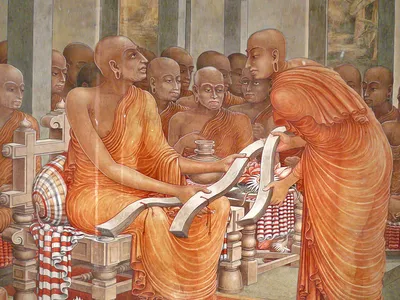
This wisdom isn’t confined to any single tradition. Within the Buddhist world, one of the most frequently shared teachings on anger — often attributed directly to the Buddha, though it actually traces to the fifth-century commentator Buddhagosa’s *Visuddhimagga* — compares a person nursing a grudge to someone who picks up a burning coal intending to throw it at an enemy, only to discover that the hand doing the burning is their own. The image is blunt on purpose: the person you resent is often unaffected by your anger, while you are the one carrying the injury forward.
In the Islamic tradition, one of the most cited moments of the Prophet Muhammad’s life is his conduct at the conquest of Mecca, where he chose to grant amnesty to many who had persecuted him and his followers for years rather than exact the revenge that was fully within his power — a decision remembered precisely because it was so costly and so deliberately chosen.
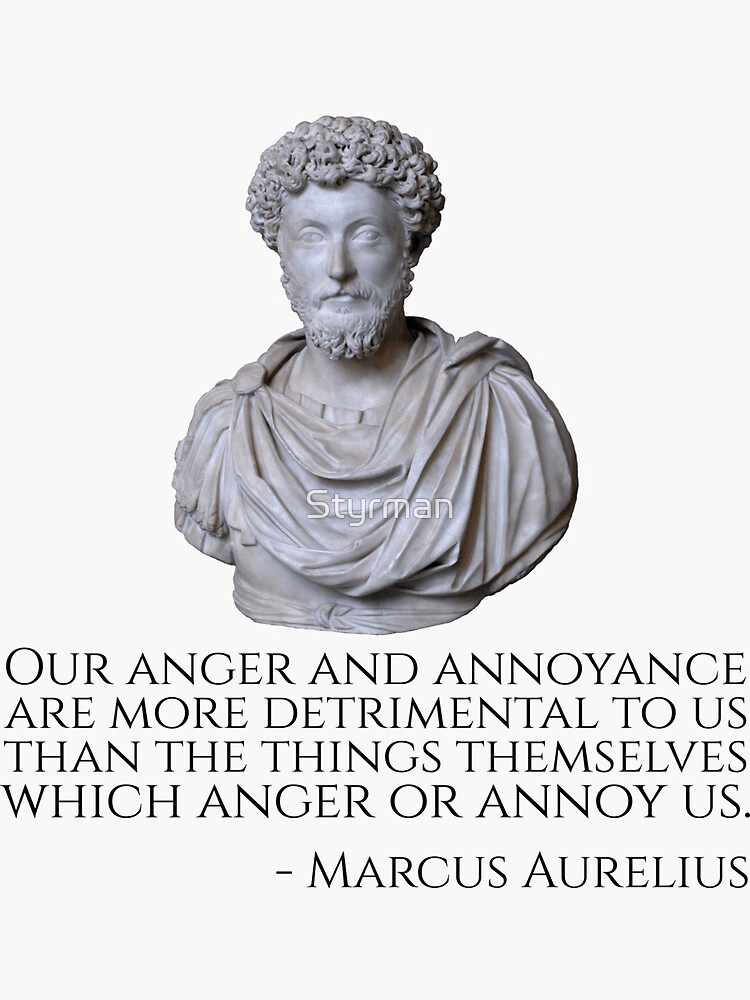
The Stoic philosophers, writing centuries before Christ and continents away from Jerusalem, arrived at a strikingly similar conclusion through pure reason rather than revelation. Epictetus taught that our peace depends entirely on correctly sorting what is within our control from what is not — and another person’s insult, once spoken, is not within our control, only our response to it is. Marcus Aurelius, ruling an empire while being needled by court rivals, wrote to himself that he had power over his own mind, not over outside events, and that realizing this was itself a form of strength. Seneca went further still in his essay *On Anger*, arguing that the single best remedy for anger is simply delay — the same instinct Abigail relied on when she rode out to intercept David before his rage could become an irreversible act.
A Story of Tragedy and Light
Sometimes the clearest teacher is a true story rather than a text, and one of the most striking modern examples comes not from millennia ago but from a single morning in 2006. On October 2 of that year, a gunman entered the West Nickel Mines School, a one-room Amish schoolhouse in Lancaster County, Pennsylvania, took a group of young girls hostage, and shot ten of them before taking his own life. Five girls between the ages of six and thirteen died. The shooting shocked the nation, but what happened next shocked it further. Within hours, members of the Amish community were at the door of the gunman’s widow, offering comfort rather than condemnation. That same night, they sat with his father in his grief. In the days that followed, Amish families set up a fund to help support the killer’s own children, urged his widow not to move away from the community, and more than half of those who attended his funeral were Amish parents and neighbors — some of them parents of the girls he had just killed. One grandfather, overhearing younger relatives speak with hatred about the gunman on the very day of the tragedy, stopped them and said simply, “We must not think evil of this man.” None of it erased the grief; parents who lost daughters that day have spoken openly, in the years since, about how sorrow and forgiveness were able to coexist rather than cancel each other out. But the community’s instinct, shaped by generations of teaching that their own forgiveness from God was inseparable from their willingness to extend it to others, was to move toward the wound rather than away from it — choosing, much like Abigail, to act quickly and let anger arrive second, if it arrived at all.

Nickel Mines School Shooting
A Lesson to Learn
In the end, what ties Nabal’s insult, the Anti-Nephi-Lehies’ buried swords, an Amish community’s swift embrace of a killer’s widow, and a Stoic emperor’s private journal together is the same recurring truth: the hurt we carry rarely punishes the person who caused it. It punishes us, in the present tense, over and over, every time we pick it back up. David didn’t need to kill Nabal to be vindicated — he needed only to put down the sword long enough to let a larger justice work. That is the invitation underneath this whole story. Not that the insult didn’t matter, or that the hurt wasn’t real, but that our future is too valuable to trade for the satisfaction of a settled score. The battle, as David’s life kept teaching him, was never really his to fight alone.
adf









Leave a Reply