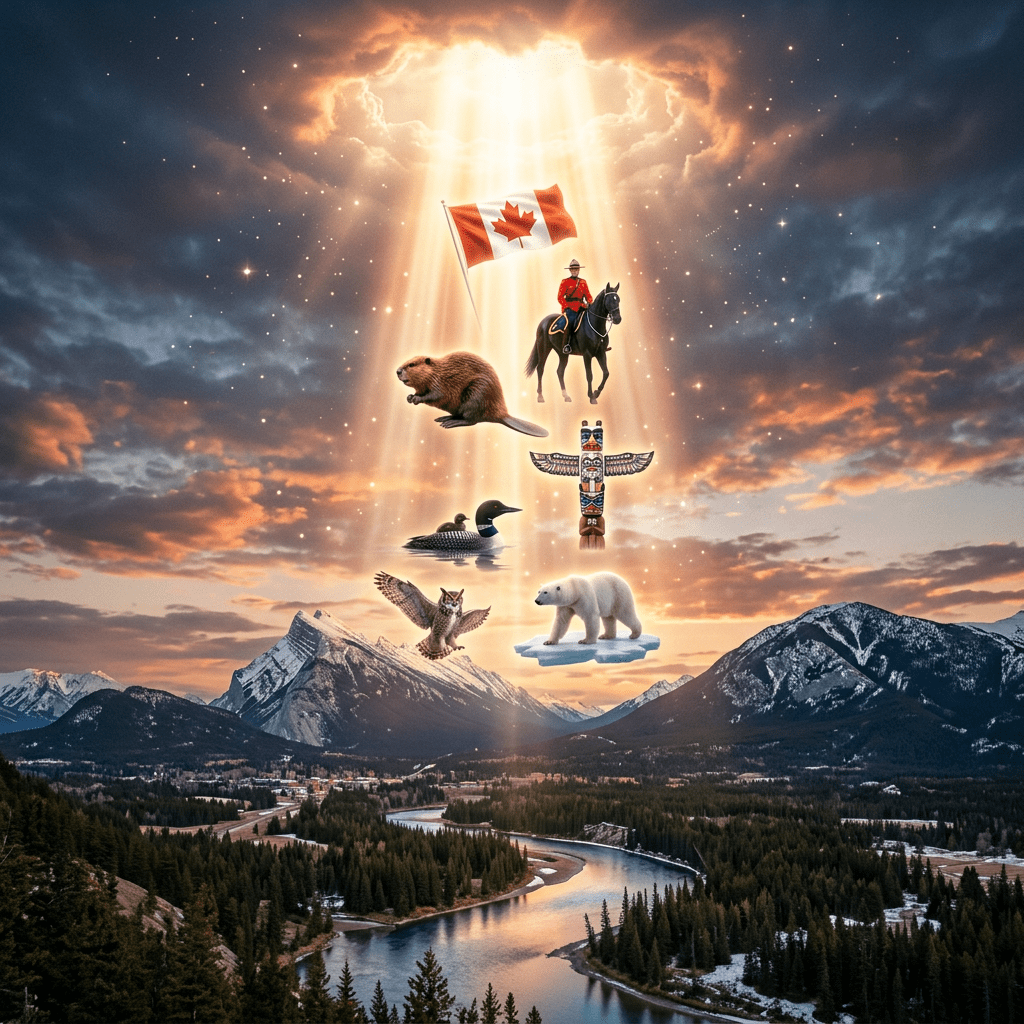
A Canada Day reflection — July 1, 2026
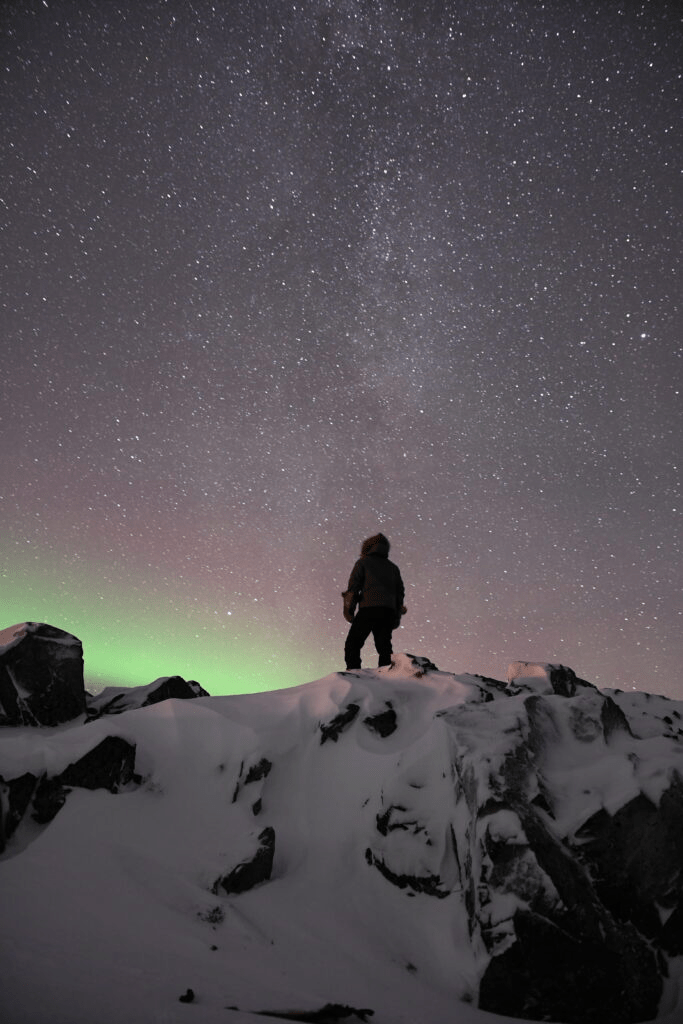
There is a moment, often on a clear summer evening, when you step outside and look up at the Canadian sky. Depending on where you live — in the rolling prairie of Saskatchewan, the forested ridgelines of British Columbia, or the vast open tundra stretching north beyond any city light — the stars come one by one, then in clusters, until the whole vault above you is alive with light. It is humbling. It makes you feel very small, and yet — mysteriously — also very held.
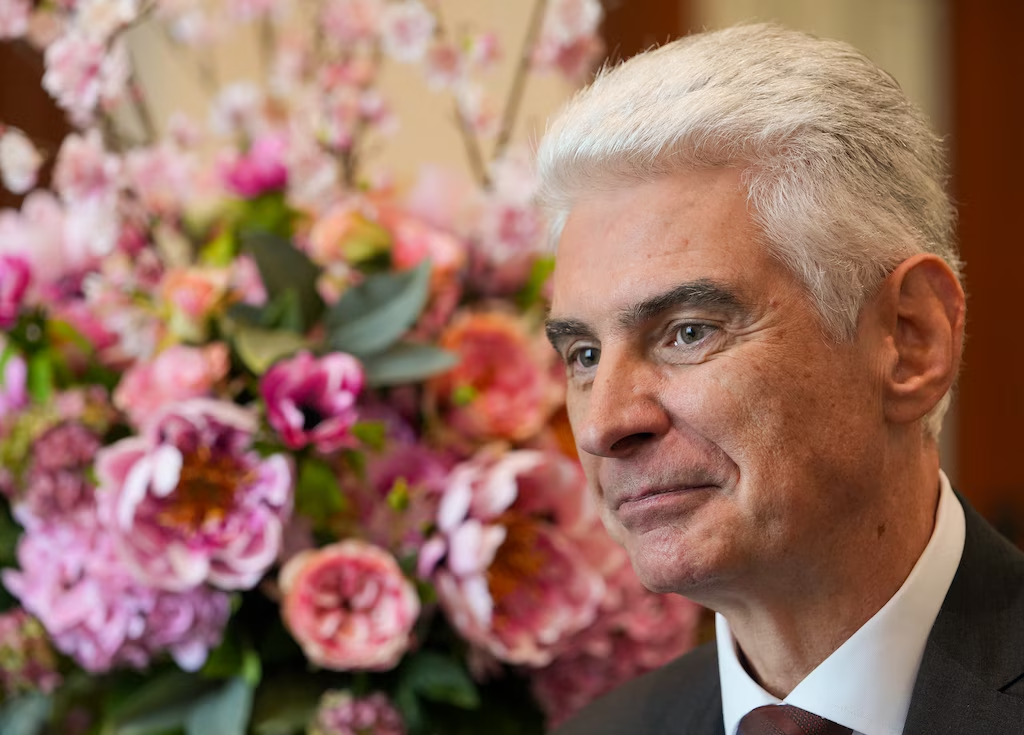
Elder Gérald Caussé of the Quorum of the Twelve Apostles of The Church of Jesus Christ of Latter-Day Saints described this very experience in his April 2026 General Conference address, “Love All; Love Each.” He recalled stepping outside on a dark night and watching the sky gradually fill with stars as his eyes adjusted. “This is like our relationship with God,” he thought. God may seem distant. The universe is vast beyond any real comprehension. And yet, that immensity does not diminish our worth in the eyes of the Creator — it magnifies it. Elder Caussé bore witness to what he called a dual truth: that God and His Son, Jesus Christ, love all — universally, without exception — and They love each — personally, intimately, and with complete knowledge of who we are.
On Canada Day, as we celebrate this country we love — its landscapes, its people, its extraordinary experiment in pluralistic community — I find this spiritual truth woven into the very identity of Canada and what it aspires to be. The gospel principle of divine love, in all its breadth and depth, is not foreign to the Canadian story. It illuminates it.
What Makes Canada, Canada
Ask people around the world what they know about Canada, and you will hear certain things repeated: that we are polite, that we welcome strangers, that we stand for peace. These are stereotypes, of course, but they point toward genuine ideals that Canadians have worked — imperfectly and sometimes painfully — to live up to.
Canada’s founding values, as expressed in our Charter of Rights and Freedoms, place human dignity, equality, and compassion at the centre of our common life. Our immigration story is one of the most ambitious inclusionary projects in human history: a deliberate, sustained commitment to building a nation out of every language, colour, faith, and culture on earth. Our peacekeeping tradition, our universal healthcare system, our truth and reconciliation work — each of these reflects a moral aspiration to see every person as worthy of dignity, care, and belonging.
These are not merely political values. They are spiritual ones. And they rhyme, I believe, with what Elder Caussé was teaching.
When he parsed those two small words — all and each — he observed something profound. The word all speaks to the universal reach of God’s love. No one is excluded. There are no strangers in God’s eyes, only beloved children. The word each, by contrast, testifies to something even more astonishing: that God’s care is not diluted by its breadth. He does not love humanity in the abstract while overlooking you specifically. He knows the number of hairs on your head. He notices when even a sparrow falls.
Canada, at its best, aspires to something structurally similar. Our national character reaches toward both dimensions: the all — the sweeping, universal inclusion of every person under the canopy of human dignity — and the each — the local, the community, the neighbour across the fence, the elder in the care home, the child in the classroom who speaks a different language and eats different food and quietly wonders whether this place is really for them too.
The challenge, for a nation as for a disciple, is to hold both at the same time.
When Love Is Both Universal and Personal
It is easy to love all of humanity in the abstract. It costs us little to say we believe in inclusion and dignity. The harder calling — and the spiritually more demanding one — is to love each: the specific, inconvenient, complicated individual in front of us.
Elder Caussé noted something that deserves to sit with us for a moment. He challenged his listeners with what he called a “soul-searching question”: Do we have exceptions? Is there anyone to whom we do not extend Christlike love? In a world of contention and division, where it is increasingly easy to sort people into categories of deserving and undeserving, the question lands like a stone in still water.
The Lord Himself addressed this in Matthew’s Gospel: “If ye salute your brethren only, what do ye more than others?” As Elder Caussé framed it, to the Lord, all people are our neighbours. There are no strangers or outcasts, only brothers and sisters.
This is a radical claim. And it is, I would argue, the spiritual foundation beneath the best of what Canada has tried to build. When we extend healthcare to all, not just those who can afford it, we are enacting this principle. When we open our doors to refugees fleeing war and violence, we are saying: you are not a stranger to us; you are a brother, a sister. When we work, haltingly and with much still yet undone, toward reconciliation with Indigenous peoples, we are — at our best — trying to extend love to those whom the national story once treated as exceptions.
Our failures in these areas are not failures of the ideal. They are failures to live up to it. And the ideal itself is spiritually grounded.
A Thread Across Many Faiths
One of the most beautiful things about Canada is that this principle — love all, love each — is not the possession of any single faith tradition. It surfaces, with remarkable consistency, across the spiritual landscape of this deeply pluralistic country.
In Islam, one of the ninety-nine names of God is Al-Wadud: the Loving, the Affectionate. The Quran teaches that God’s mercy encompasses all things. Muslim communities across Canada enact this through zakat, the obligation to give to those in need, and through sadaqah, voluntary acts of charity given not for recognition but as an expression of divine love flowing through human hands.
In Judaism, the concept of hesed — often translated as lovingkindness — is central to the character of God and the calling of humanity. The Mishnah teaches that to save a single soul is as if one has saved an entire world. Every person carries within them a universe of worth. This is the “each” rendered in its deepest form.
In Indigenous spiritualities across Canada — each one distinct, each one deep — there runs a common understanding of the interconnectedness of all living things, of the relational obligations that bind us to the land, to our ancestors, and to those yet to come. The Lakota concept of Mitákuye Oyásʼiŋ — “All are related” — expresses a cosmic kinship that transcends tribe, species, and time. To love all is not merely a moral choice but a recognition of the truth of how things are.
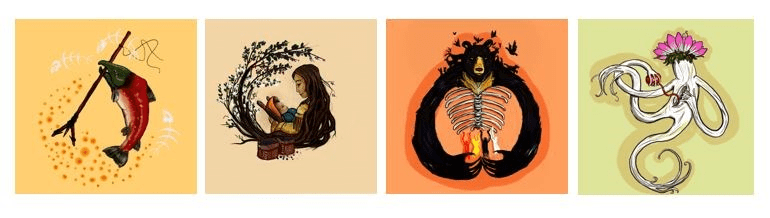
In Buddhism, metta — loving-kindness — is a practice and a spiritual quality to be cultivated without boundaries. The traditional metta meditation extends love first to oneself, then to loved ones, then to neutral persons, then to difficult persons, and finally to all sentient beings everywhere without exception. The movement from each to all is the very arc of spiritual growth.
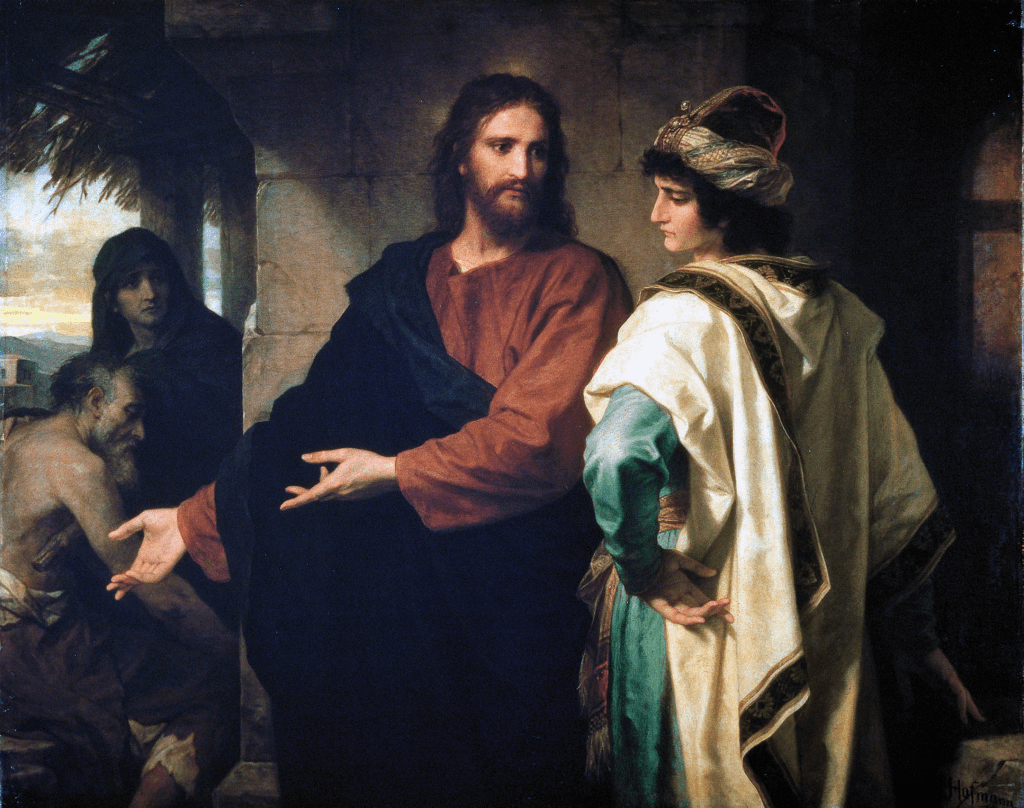
In Christianity more broadly, the command is stated plainly by the Lord: “Thou shalt love the Lord thy God with all thy heart… and thy neighbour as thyself.” When a lawyer asked who counted as a neighbour, Jesus answered with the parable of the Good Samaritan — a story deliberately designed to shatter the category of exception.
These are not parallel traditions happening to coincidentally agree. They are different facets of a single spiritual light: the conviction, held across the human family in countless languages and forms, that love is the fundamental nature of the divine, and that we are most fully ourselves when we reflect that love outward — to all, and to each.
The Marathon of Hope: A Canadian Story of Love in Action
No reflection on Canadian values and the power of love would be complete without pausing at the life of Terry Fox.
Terry was not a saint in any formal religious sense. He was a young man from Port Coquitlam, British Columbia — eighteen years old when he was diagnosed with osteosarcoma and his right leg was amputated above the knee. But what happened to him in the cancer ward changed the trajectory of his life and, eventually, of our country.
He watched fellow patients suffer, including young children. He felt — deeply, personally, uncomfortably — the pain of each specific person around him. And from that encounter with the “each,” he conceived a vision that embraced the “all”: a cross-Canada run to raise one dollar from every Canadian for cancer research. He called it the Marathon of Hope.
On April 12, 1980, Terry dipped his prosthetic leg into the Atlantic Ocean at St. John’s, Newfoundland, and began to run. He ran on a distinctive hop-step, his artificial leg requiring extra time to reset with each stride. He ran in rain and heat, through small towns where sometimes only a handful of people gathered by the road, and through cities where thousands came to cheer. He averaged roughly a marathon’s distance each day — and he did it for 143 consecutive days, covering more than 5,300 kilometres.
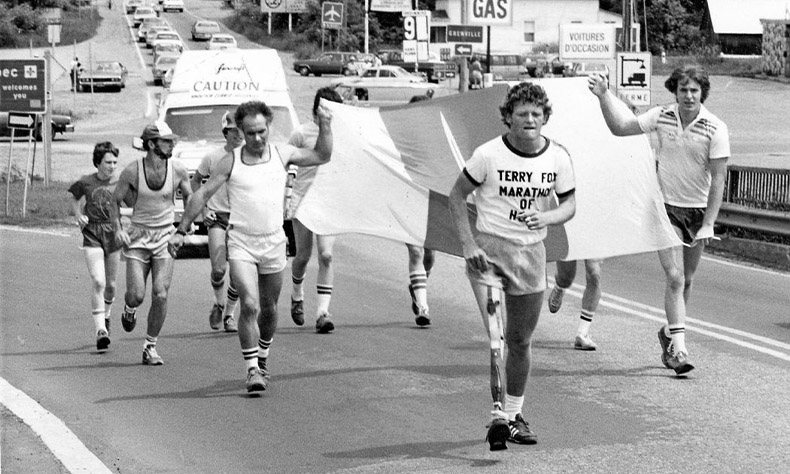
What happened along that route is one of the most remarkable social phenomena in Canadian history. A nation watched, and then a nation joined. His determination united people from every province, every background, every walk of life. It was as if Terry’s act of compassion — born in a cancer ward from his encounter with suffering individuals — ignited something latent in the Canadian character. People gave. They showed up. They wept on the roadside. They sent letters. Something long-dormant stirred.
Before cancer forced him to stop near Thunder Bay in September 1980, and before his death at just twenty-two years old on June 28, 1981, Terry had already achieved his goal of one dollar from every Canadian. And he had set in motion a legacy that has since raised more than $950 million for cancer research — funding over 1,300 innovative projects and bringing hope to millions.
Prime Minister Pierre Trudeau, speaking in the House of Commons after Terry’s death, said something very true: “It occurs very rarely in the life of a nation that the courageous spirit of one person unites all people in the celebration of his life… We do not think of him as one who was defeated by misfortune but as one who inspired us with the example of the triumph of the human spirit over adversity.”
Terry Fox embodied what a media commentator once called “the most cherished Canadian values: compassion, commitment, perseverance.” But at the root of all three is something simpler — love. Terry Fox loved the “each“: each face he had seen suffering in that hospital. And that love for the “each” expanded, without losing its intensity, into love for the “all.” He ran for all of Canada. He ran for everyone who would ever face this disease.
This is exactly what Elder Caussé was describing. Christlike love, he taught, grows and multiplies as it is shared. When we show others the pure love of Christ, they come to recognize more fully how deeply the Lord cares for them — and in turn, their own capacity to love is enlarged and strengthened. Terry Fox did not merely raise money. He enlarged a nation’s capacity to love.
No Anonymity in the Kingdom of God — or in the Community of Canada
One phrase from Elder Caussé’s talk has stayed with me since I first heard it: “In the Church, there should be no anonymity.” He was speaking about the way Christlike love notices the one — the person on the edge of the congregation, the quiet soul who shows up every week but never quite feels seen, the newcomer who wonders whether there is a place for them.
It strikes me that this is equally the spiritual calling of the community in Canada.
We live in a large and sometimes lonely country. Our cities can be anonymous places — millions of people passing through the same streets without ever truly encountering one another. Our rural and northern communities can feel invisible to the centres of power and attention. Entire peoples — Indigenous communities, recent immigrants, those living in poverty, those carrying invisible disabilities or invisible grief — can move through Canadian life feeling like background figures in someone else’s story.
The spiritual invitation, from many faith traditions and from the best impulses of Canadian civic identity, is to refuse anonymity. To see. To notice. To move beyond what Elder Caussé called “comfortable circles of familiar friends focused on their own interests” and extend our attention — our real, costly, personal attention — to those who are not yet in that circle.
Our congregations can model this. Our communities can model this. Not by grand gestures alone, but by the small, repeated, deliberate choice to love each — each person who walks through the door, each name we take the trouble to learn and remember, each face we turn toward rather than past.
The Divine Love Behind It All
There is one more dimension of Elder Caussé’s message that I want to linger on, because it changes everything.
The reason we are called to love all and love each is not primarily that it is useful, or that it builds a better society, or even that it reflects our best national ideals. The reason is that it is true. It reflects reality. It is how God actually is.
The God described by Elder Caussé — and by the scriptures of many traditions — is not a distant force or an abstract principle. He is a Father who governs galaxies and also guides the details of individual lives. As Elder Neal A. Maxwell put it: “God is in the details!” He knows and loves each and all of mankind. The universe’s vastness does not stretch His attention thin. Every soul carries infinite worth in His eyes.
This means that when you feel overlooked, you are not. When you wonder whether your pain is noticed, it is. When you carry a burden that no one else seems to see, the One who made the stars knows the weight of it. You are not a statistical unit in a population. You are known. You are “each.”
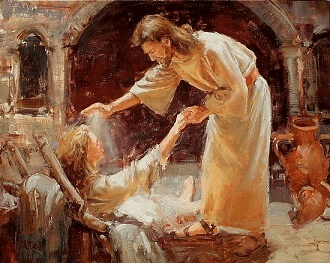
And this means, in turn, that every person we pass — on the street, in the hospital, at the community centre, at the border crossing, in the pew — is also “each” to God. Every single one. The homeless man on Hastings Street. The Sikh grandmother on the SkyTrain. The Cree elder in Winnipeg. The Francophone teenager in Moncton who feels caught between two worlds. The Syrian family learning to navigate a northern winter for the first time. God knows each of them by name. He loves each of them with a love that is not generalized but specific, tailored, and deep.
If we believe that — if we really believe it — it changes how we look at every face we encounter.
A Canada Day Prayer
So as we celebrate on July 1st, as the flags go up and the fireworks begin and the barbecues smoke and children run through the parks of this vast and beautiful country, I want to offer a gentle reflection, in the spirit of faith.
Canada is not perfect. No nation is. We carry real wounds — historical and present — that call for honest reckoning. But we also carry real gifts: a commitment, however imperfectly honoured, to the dignity of every person; a tradition of opening doors; a vast northern sky under which all of us, from St. John’s to Victoria, from Windsor to Iqaluit, stand equally small and equally held.
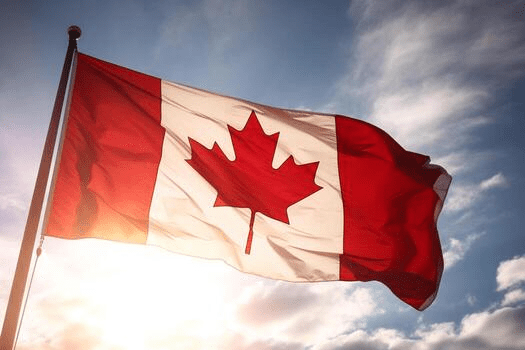
May we be a people who love all — sweeping, without exception, the full beautiful mosaic of who we are together. May we also be a people who love each — the specific, present, irreplaceable person in front of us today, who carries within them a universe of worth and a story worth knowing.
May we, in the words of Elder Caussé, follow the Lord’s perfect example and learn to love all and to love each, just as He does.
And may we, like Terry Fox, find that when love for the each takes root in us deeply enough, it has no choice but to reach out and embrace the all.
Happy Canada Day.
“Christlike love grows and multiplies as it is shared. When we show others the pure love of Christ, they come to recognize more fully how deeply the Lord cares for them — and, in turn, their own capacity to love is enlarged and strengthened.” — Elder Gérald Caussé, “Love All; Love Each,” April 2026 General Conference
adf




Leave a Reply