
Forty years ago I was serving as a missionary in Florence. At that time, I was enduring a very difficult challenge that was almost hampering my purpose of what I was doing. It was painful, even surreal. And I did not know what to do. As a missionary, I taught people that when in need we should ask God in faith and He will answer us (James 1:5). So I thought: “How can I teach this principle if I don’t practise it?” Therefore I decided to ask for help. After my prayer, I felt prompted to open my book of Scriptures at random and read the words in it. The first attempt brought me to the verses found in Doctrine & Covenants section 98, verses 1 to 3 (Doctine & Covenants is a collection of revelations received by Jospeh Smith Jr. and other presidents of the Church of Jesus Christ of Latter-Day Saints for its members). I read these beuriful words: “Fear not, let your hearts be comforted; yea, rejoice evermore, and in everything give thanks; Waiting patiently on the Lord…and all things wherewith you have been afflicted shall work together for your good, and to my name’s glory, saith the Lord.” Peace immediately entered into my heart and I decided to put my complete trust in God. This brought me to receive other answers that eventually helped me with my situation, and slowly I was able to overcome my challenges.

As I look back to that time and think about my life experience from then to this day, I have come to the conclusion that these verses, written to a people enduring persecution, transcend their original setting to speak to anyone facing uncertainty, suffering, or deferred hopes. They promise that prayers are heard, that God has sworn to answer, and that affliction itself can be consecrated for good.
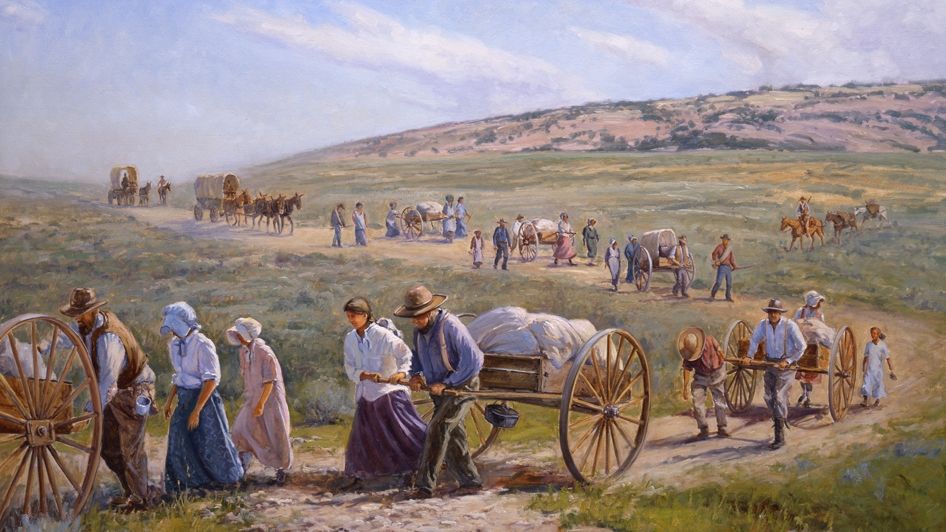
For Latter-day Saints, these words echo one of the central themes of the Restoration—that trials are not random but redemptive. The Saints in Missouri, driven from their homes, were asked to see beyond their immediate suffering and trust that God’s covenant was sure. Later, Joseph Smith in Liberty Jail was reminded that even betrayal, imprisonment, and injustice would “be for [his] good” (D&C 122:7). In this light, the Saints’ endurance became part of the soul’s sanctification, shaping them for eternal purposes.
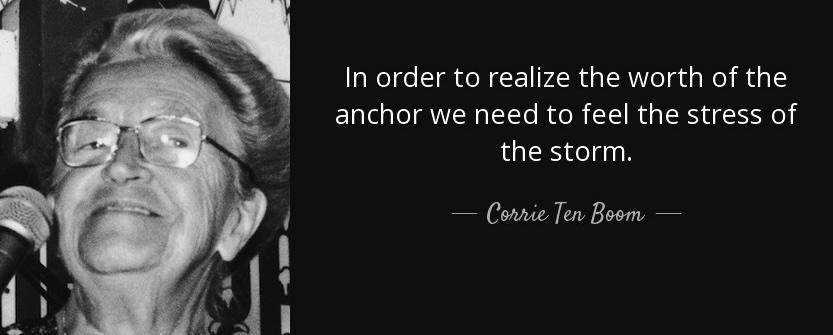
The Bible mirrors this promise. Paul’s affirmation in Romans 8:28—“All things work together for good to them that love God”—provides a similar lens. Corrie ten Boom, a Christian who survived a Nazi concentration camp, later testified that even her darkest suffering opened doors for her to share Christ’s love and forgiveness. Gratitude, even in the shadow of cruelty, became her pathway to healing. This illustrates the power of viewing hardship through the lens of trust in divine providence.
Buddhism, though approaching from a different angle, offers a kindred insight. The Buddha taught, as I mentioned in previous article, that suffering (dukkha) is part of the human condition, yet it also carries the potential for awakening. Consider Thích Nhất Hạnh, a Vietnamese monk who endured war and exile. Rather than turning bitter, he taught mindfulness and compassion, saying, “No mud, no lotus.” Waiting patiently on the Lord finds resonance here: difficulties become the soil from which compassion and wisdom grow.

The Baha’i tradition deepens this view with its own counsel. Baha’u’llah urged his followers: “Be patient under all conditions, and place your whole trust in God. Render thanks unto Him at all times.” One Baha’i woman imprisoned in Iran in the 1980s wrote letters from jail, full of gratitude and encouragement, even as she faced execution for her faith. Her patience and thanksgiving became a quiet witness to the power of trust in God’s timing.

Mona Mahmudnizhad – 1965-1983
From the perspective of Ernest Holmes and the Centers for Spiritual Living, these verses affirm a metaphysical law—that every prayer, sincerely offered, is answered in harmony with the universal good. Holmes taught that Spirit responds to the deep intention of the soul, even if the form of the answer looks different than expected. Think of someone who prays for healing and, while not always cured, discovers a deeper peace or strength to live fully. In Holmes’s view, such outcomes prove that prayers are never wasted; they are recorded in divine law, just as the scripture promises.

The command to “rejoice evermore” may be the most counterintuitive part of the passage. Yet history is filled with people who embodied this joy. Viktor Frankl, a Jewish psychiatrist imprisoned in Auschwitz, discovered that even in the harshest conditions, one freedom remained: the ability to choose one’s attitude. By rejoicing in small mercies—a crust of bread, a shared word of kindness—he found meaning that sustained him. His experience echoes the Psalmist’s words: “This is the day which the Lord hath made; we will rejoice and be glad in it” (Psalm 118:24).
Patience is another thread that ties these traditions together. In the Latter-day Saint text, patience rests on the assurance that the “Lord of Sabaoth” is at work—a title that evokes God’s command over heavenly hosts. In Buddhism, patience (kshanti) is a strength that transforms suffering into compassion. In the Baha’i Faith, patience reflects unwavering trust in God’s will. In Holmes’s teaching, patience is confidence that divine law is unfolding perfectly. Nelson Mandela, who waited 27 years in prison, embodied this principle. His patience was not passive but active faith in justice, eventually leading to reconciliation and peace.
Taken together, these verses remind us that affliction, though often unwelcome, can be consecrated. Latter-day Saints may see it as sanctification; Christians, as God’s ability to turn all things to good; Buddhists, as the soil for awakening; Baha’is, as the practice ground for trust; and Holmes’s students, as the unfolding of divine law. The language differs, but the invitation is the same: to trust that hardship, when embraced with faith and gratitude, is transformed into a source of wisdom and strength.
Ultimately, D&C 98:1–3 is not just a text for a specific people in a specific moment. It is a universal promise: Fear not. Be comforted. Rejoice. Give thanks. Wait patiently. Trust that your prayers are heard, sealed, and answered. And most importantly, believe that your afflictions, however heavy, are not wasted. They are part of the great tapestry of divine purpose—woven for your good and to the glory of the One who holds us all.
ADF








 Mindsoulness - where mind and soul meet!
Leave a reply to alsdefeo1959 Cancel reply