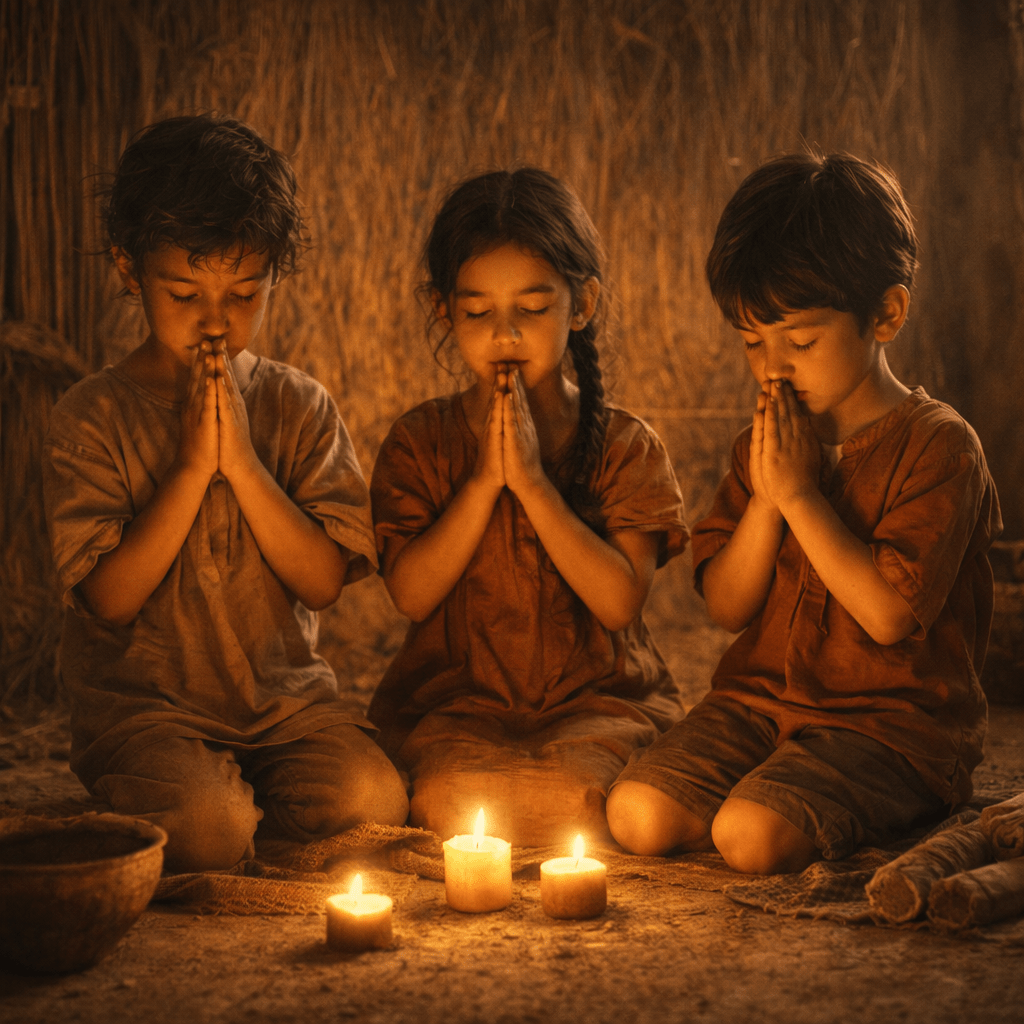
When Kat Eghdamian wrote in The Guardian that schools “cultivate the mind but neglect spiritual education,” leaving children “unanchored in a challenging world,” she touched something ancient and urgent. Across the world’s great faith traditions—and increasingly within mainstream mental health research—a consensus is forming: the spiritual dimension of human development is not supplementary. It is foundational.
When news came through that a shooting in a school in Tumbler Ridge, a quiet and small community in Northern B.C., had occurred on February 10, 2026, I was horrified, shocked, and saddened. Most of the victims were elementary and middle school children. The dead count also included a brave teacher and the shooter, who, we found out later, had been struggling with mental health issues.
While, sadly, these occurrences have become frequent south of the border and have been in the news for many years, it is truly the first time Canada has experienced such a tragic and devastating event.
Thanks to my friend Marsel Amhadzadegan of the Baha’i Faith, who came up with the idea of issuing a “Call to Action” to protect and prevent Lake Country, the community we live in, from having to see this happen to our schools, we have been able to begin discussions to find ways to help our youth, especially the more vulnerable ones.
A few days after our first meeting, my friend Kay, who, like me, serves as a Spiritual Care provider at the Kelowna General Hospital, sent me a comprehensive study on the positive effect of a holistic approach to mental health that includes spiritual care, as opposed to the more patch-as-you-go approach that only focuses on mental health. She also sent me an article by Dr Kat Eghdamian, a human rights expert, writer, and adviser on religion, ethics, and social justice from New Zealand, outlining the importance of spiritual care for youth and children and how the lack of specific spiritual care programs in the education system creates a void that is needed more than ever. My purpose is to explore this further in this article and advocate for action in our ever-more secular school programs.
Dr. Eghdamian’s article gets immediately to the point. In the spring of 2026, the numbers are stark. New Zealand ranks last among 36 OECD and EU nations in child mental wellbeing, according to UNICEF. Youth depression, anxiety, and loneliness have reached crisis levels across the developed world. Economists describe youth happiness as “in decline worldwide.” Social media, economic precarity, and the collapse of traditional community structures all bear partial blame. But the deeper question—the one that physicians, educators, and parents are beginning to whisper—is whether modern secular education has excised something vital from the human story: the cultivation of the soul.
This article does not argue for proselytizing in classrooms, nor for any one tradition’s approach over another. Instead, it draws together the voices of different religions and faith groups, and their writings alongside a growing body of international psychiatric and psychological research to make a unified case: that spiritual care is not opposed to mental health. It is, in many respects, its deepest root.
Part One – The House That Leans: Understanding the Void
The Māori concept of te whare tapa whā—the four-walled house of wellbeing—provides an elegant diagnostic tool. Physical, mental, and social health are well-tended walls in modern education; the spiritual foundation, taha wairua, is repeatedly left unbuilt. Yet the framework insists it is precisely wairua that gives coherence to the others. Without it, the house leans.
This is not merely an indigenous metaphor. It is an insight confirmed, in strikingly similar language, across thousands of years of human spiritual inquiry. As a member of The Church of Jesus Christ of Latter-day Saints, I subscribe to the scripture known as the Doctrine and Covenants, which states plainly that “the glory of God is intelligence, or, in other words, light and truth” (D&C 93:36). But, intellect alone, the scripture further implies a few verses later, is insufficient. It must be yoked to the light of the Spirit.
LDS President David O. McKay articulated the vision of whole-child education with characteristic clarity:
“The purpose of education is to develop the whole man—body, mind, and spirit—and to help youth find themselves, to find their relationship to God and to their fellowmen.” – David O. McKay
McKay’s formulation is not a relic of a more religious era. It anticipates, by decades, the findings of modern developmental psychology, which increasingly identify the search for meaning, transcendence, and moral purpose as core developmental needs—not optional extras for children raised in faith communities.
Part Two – Children of God
In addition, the LDS Family Proclamation issued in 1995 by the First Presidency of the Church opens with a declaration that “all human beings—male and female—are created in the image of God. Each is a beloved spirit son or daughter of heavenly parents, and, as such, each has a divine nature and destiny.”
If children are, at their core, divine beings inhabiting mortal frames, then education that addresses only the mortal frame—cognitive skills, behavioral management, measurable academic outcomes—is attending to the vessel while neglecting the light it carries. This is not a peripheral concern for Latter-day Saints; it is doctrinally central.
“Train up a child in the way he should go: and when he is old, he will not depart from it.” (Proverbs 22:6)
The Book of Mormon amplifies this with remarkable specificity. King Benjamin’s address in Mosiah is one of this scripture’s most sustained treatments of how faith is transmitted across generations. He tells parents to “teach them to walk in the ways of truth and soberness; ye will teach them to love one another, and to serve one another” (Mosiah 4:15). The vision is not merely moral instruction; it is the cultivation of an inner life oriented toward love, service, and transcendent purpose.
The prophet Alma, describing the spiritual awakening he experienced and hoped to transmit, asks the searching question that echoes across every faith tradition’s concern for the next generation: “And now behold, I ask of you, my brethren of the church, have ye spiritually been born of God? Have ye received his image in your countenances? Have ye experienced this mighty change in your hearts?”— Alma 5:14, Book of Mormon
The “mighty change of heart” language—a recurring motif in both the Book of Mormon and the New Testament (see Romans 12:2, Ezekiel 36:26)—suggests that spiritual development is not merely additive but transformative. It changes the perceiving subject, not just the accumulation of beliefs.
The late LDS President Russell M. Nelson has spoken urgently about the spiritual hazards facing young people in the digital age: “Nothing will help your children more than having the Holy Ghost as their constant companion. That is what we are working toward. Perilous times are ahead.” President Nelson’s language of “perilous times” is not apocalyptic rhetoric; it is pastoral concern backed by observable statistical reality. And his prescription—not more academic preparation, not more social skills programs, but the cultivation of an inner spiritual companion—aligns remarkably with what researchers are finding about protective factors against youth mental illness.
The theology of divine identity—that each child is not merely a developing human being but a spirit of eternal origin temporarily inhabiting a mortal body—carries profound implications for education. If children are, as Latter-day Saints believe, literally children of Heavenly Parents with divine potential encoded in their spiritual DNA, then any educational framework that ignores that dimension is working with an impoverished conception of the student.
Part Three – L’Dor V’Dor: From Generation to Generation
If any civilization has placed the spiritual education of children at the absolute center of its project, it is Judaism. The Hebrew word chinuch—education—shares its root with chanukah, meaning dedication or consecration. Education, in the Jewish framework, is not merely information transfer; it is the consecration of the young to a life of meaning, responsibility, and a covenant relationship with the Divine.
The Shema—the foundational declaration of Jewish faith found in Deuteronomy 6:4-9 includes explicit, intimate instructions about transmitting spiritual life to children: “And thou shalt teach them diligently unto thy children, and shalt talk of them when thou sittest in thine house, and when thou walkest by the way, and when thou liest down, and when thou risest up.” The spiritual education of children is woven into the fabric of daily life, not confined to a classroom hour.
“Hear, O Israel: the Lord our God, the Lord is one. And thou shalt love the Lord thy God with all thine heart, and with all thy soul, and with all thy might.” (Deuteronomy 6:4–5)
The Talmudic tradition extends this into a strikingly modern-sounding developmental psychology. Rabbi Shimon bar Yochai taught that a father’s first obligation to his son was to teach him Torah—not literacy alone, but the way of reading reality through sacred lenses. The sages recognized that children’s first experiences of meaning, wonder, and moral seriousness would shape their entire subsequent development.
The Hebrew concept of tzelem Elohim—“the image of God” in which each human being is created (Genesis 1:27)—carries direct implications for how we regard children. To see a child as bearing the image of God is to see in every child an irreducible dignity, an inherent capacity for goodness, and a vocation for something larger than mere individual survival or success. This is not empty theology; it is a framework that fundamentally shapes how teachers, parents, and community members attend to the inner lives of the young.
Rabbi Jonathan Sacks, the late Chief Rabbi of the United Kingdom and one of the twentieth century’s most lucid voices on the intersection of faith and public life, wrote with characteristic precision about the relationship between spiritual identity and mental flourishing: “The Hebrew word for education, chinuch, means to initiate, to dedicate, to begin. We do not educate children by filling their minds. We educate them by initiating them into a story, a history, a set of responsibilities. We tell them: this is who you are and who you are called to be.”
The concept of l’dor v’dor—“from generation to generation”—speaks to what modern developmental psychologists would call narrative identity: the deep human need to understand oneself as part of a story that began before and will continue after one’s individual life. Research consistently shows that young people who possess a strong sense of their place in a larger narrative demonstrate greater resilience, better mental health outcomes, and lower rates of risk behavior. Judaism has been practicing this insight for three thousand years.
The Jewish concept of tikkun olam—repairing the world—instills in children from their earliest years not only a sense of their own dignity but a sense of moral responsibility to others. This outward orientation—the training of the child’s spiritual energies toward the well-being of the community and the healing of the world—is precisely what is missing when education attends only to individual emotional regulation and cognitive achievement.
Part Four – Tarbiyah: Nurturing the Soul Toward God (Qur’an, Hadith, and the Formation of the Heart)
The Arabic word most commonly translated as “education” in the Islamic tradition is tarbiyah—a term derived from the same root as Rabb, one of the primary divine names in the Qur’an, meaning the Lord who nurtures, sustains, and causes to grow. To educate a child, in the Islamic framework, is to participate in a divine act: to nurture a soul toward its fullest realization in relationship with God.
The Qur’an itself opens with the declaration Bismillah ir-Rahman ir-Raheem—“In the name of God, the Most Gracious, the Most Merciful”—followed immediately by the invocation of God as Rabb al-’ālamîn: the Lord of all the worlds, the ultimate nurturer and sustainer of all that exists. The spiritual education of children, in this framework, is not a human project imposed upon natural development; it is cooperation with the sustaining care of God already at work in every child.
“Whoever you are, in whatever condition, do not neglect the education of your children. For when you neglect them, you have wronged them and yourself.”Imam Al-Ghazali, Ihýā’ ‘Ulūm ad-Dîn (The Revival of the Religious Sciences), 11th–12th c.
Al-Ghazali’s monumental work Ihýā’ ‘Ulūm ad-Dîn—The Revival of the Religious Sciences—devoted extensive attention to the spiritual formation of children. He argued that the child’s heart (qalb) arrives in the world like a pure, unmarked tablet: capable of receiving any impression, tending toward the divine by nature, but requiring deliberate cultivation to realize its potential. The image of the heart as a mirror—which, when polished through prayer, remembrance, and moral practice, reflects the divine light—became central to the Sufi tradition and Islamic educational philosophy broadly.
The Prophet Muhammad is recorded in the hadith collections as having said: “Every child is born in a state of fitrah [natural disposition toward God]; it is his parents who make him a Jew, a Christian, or a Magian.” This remarkable statement—echoed in the developmental psychology of Jean Piaget and contemporary researchers like Lisa Miller—posits that spiritual capacity is not taught into children from the outside but is inherent in them, awaiting activation or suppression by their environment.
Contemporary Muslim scholars of education have developed this insight into a comprehensive philosophy of holistic child development. Dr. Umar Faruq Abd-Allah, a prominent American Muslim scholar, has written about the concept of adab—a term inadequately translated as “manners” but encompassing the full cultivation of character, spiritual sensitivity, and social grace—as the foundation of Islamic education: “Adab is the means by which the human being comes to embody the qualities of God: mercy, justice, beauty, wisdom. To educate a child in adab is to help them become, in their person, a reflection of the divine attributes. This is not an ornament to education. It is its essence.”
Part Five – Unity, Education, and the Purpose of Human Existence
The Bahá’í writings offer what may be the most explicitly educational of any major tradition’s theological anthropology. Bahá’u’llāh, the founder of the Bahá’í Faith, wrote in the late nineteenth century with striking prescience about both the necessity and the nature of spiritual education: “Regard man as a mine rich in gems of inestimable value. Education can, alone, cause it to reveal its treasures, and enable mankind to benefit therefrom.”
This passage, cited by Dr. Eghdamian in her Guardian piece, is not merely rhetorical. It reflects a systematic Bahá’í philosophy in which the human being is understood as possessing, in latent form, capacities of understanding, creativity, and moral agency that require cultivation to become manifest. The task of education—spiritual education, in particular—is revelatory: it does not impose foreign content upon an empty vessel but reveals what is already there.
‘Abdu’l-Bahá, son of Bahá’u’llāh and the authorized interpreter of his teachings, devoted extensive writings and talks to the question of children’s spiritual development. He emphasized that spiritual education must begin in infancy, before the critical window of formation closes: “The child must be educated in such a way that it may strive with all its heart and soul to show forth the attributes of the All-Merciful. The mother is the first teacher of the child. For children, at the beginning of life, are fresh and tender as young plants; they will grow in whatever way you train them.”
The Bahá’í Children’s Classes—now operating in thousands of neighborhoods across more than 180 countries—represent the practical implementation of this philosophy. The curriculum is built around the cultivation of virtues: honesty, compassion, courage, justice, and service. Children engage with stories from diverse faith traditions, memorize prayers, create art, and practice small acts of service in their communities. The approach is deliberately interfaith, drawing on the Bahá’í conviction that all the world’s great religions share a common spiritual reality and that children benefit from encountering that shared wisdom in its breadth.
Parents and teachers participating in Bahá’í children’s education programs around the world—from the Favelas of Brazil to the townships of South Africa to indigenous communities in rural Bolivia—consistently report what the research literature would call “protective factors”: increased empathy, reduced aggression, greater sense of purpose, stronger social connection. These are precisely the qualities whose absence is driving the global mental health crisis among youth.
“The process of the spiritual education of children is, ultimately, the process of the transformation of humanity. A generation raised to love, to serve, to know themselves as noble souls—this is the foundation of the world that must come.” -The Universal House of Justice, Ridýván Message, 2010
Part Six – A Common Path and The Need for Spiritual Care
Across these rich and distinct traditions I touched upon, certain themes recur with enough regularity that they begin to look less like theological opinion and more like discovered truth.
These convergences are not coincidental. They represent what the comparative study of religion calls a “perennial philosophy”—a core of insights about the human condition that surfaces across cultures and centuries because it tracks something real. And what it tracks, in this case, is the observable reality that children deprived of transcendent meaning, moral purpose, and community belonging do not flourish. They struggle. The statistics confirm what the prophets knew.
For much of the twentieth century, an unfortunate division persisted between the language of faith and the language of clinical mental health. Freud’s dismissal of religion as “illusion” cast a long shadow over psychiatry. But the empirical evidence accumulated over the past four decades has made this division increasingly untenable. Spiritual care—broadly defined as attention to the transcendent, meaning-making, and moral dimensions of human experience—is now recognized across the world’s major health systems as a legitimate and important component of holistic care.
Here are some Research Spotlights:
Dr. Lisa Miller — Columbia University: The Awakened Brain
Psychiatrist and Columbia University professor Dr. Lisa Miller has conducted landmark research on spirituality and mental health across the lifespan. Her 2012 study, published in the American Journal of Psychiatry, followed children of depressed parents over ten years and found that those who described religion or spirituality as highly important to them were 75% less likely to develop major depression themselves.
In her 2021 book The Awakened Brain, Miller presents neuroimaging evidence suggesting that spiritual experience activates a distinct neural circuit—one associated with meaning, resilience, and connection—and that this circuit can be cultivated through practices of prayer, meditation, time in nature, and moral reflection. She argues that spirituality is not a cultural overlay on human development but “a core human capacity, as fundamental as cognition, emotion, and relationship.”
Source: Miller, L. et al., “Religiosity and Major Depression in Adults at High Risk,” American Journal of Psychiatry, 2012; Miller, L., The Awakened Brain, Random House, 2021.
Harvard T.H. Chan School of Public Health: Religion, Childhood, and Wellbeing
A major 2018 study by researchers at the Harvard T.H. Chan School of Public Health, published in JAMA Pediatrics, followed more than 5,000 children who were raised with some religious or spiritual practice. Compared with peers raised with no religious exposure, they were significantly more likely as young adults to report higher life satisfaction, positive affect, and lower rates of smoking, drug use, and early sexual initiation. They were also more likely to volunteer in their communities and to report a sense of mission and calling in their work.
The researchers noted that the benefits held across religious traditions and across levels of religious participation, suggesting that the protective factor was not doctrinal content per se but the shared ritual, community, and meaning-making that religious participation provides.
Source: Li, S. et al., “Association of Religious Service Attendance with Mortality Among Women,” JAMA Internal Medicine, 2016; VanderWeele, T.J. et al., “Association of Religious Service Attendance with Mortality Among Women,” JAMA Pediatrics, 2018.
World Health Organization: Spiritual Dimension of Health
The World Health Organization’s definition of health, revised in 1998, explicitly proposed adding a fourth dimension—“spiritual”—to the existing physical, mental, and social dimensions. While the formal revision was not adopted in the final constitutional text, the WHO’s work on spirituality and health has continued. A 2001 WHO consultation on spiritual aspects of health concluded that “spiritual well-being is an integral and central aspect of health” and urged member states to develop frameworks for integrating spiritual care into national health systems.
WHO surveys across diverse cultural contexts have consistently found that patients and caregivers across different countries and religious traditions regard spiritual care as important to healing—often more important than is currently acknowledged in clinical practice.
Source: World Health Organization, “WHOQOL and Spirituality, Religiousness, and Personal Beliefs,” WHO/MSA/MHP/98.2, 1998.
Lancet Psychiatry: Purpose, Meaning, and Adolescent Mental Health
A 2022 systematic review in Lancet Psychiatry examining data from 57 studies across 22 countries found robust associations between adolescents’ sense of purpose and meaning and a wide range of mental health outcomes: lower rates of depression, anxiety, and suicidal ideation; higher rates of life satisfaction and academic engagement; and greater resilience under adverse conditions including poverty, bereavement, and social isolation. The review concluded that “purpose and meaning interventions represent an underutilized and evidence-supported approach to adolescent mental health promotion.”
The authors noted that while their review did not focus exclusively on religious or spiritual programs, the majority of purpose-and-meaning interventions studied operated within faith or contemplative frameworks.
Source: McKnight, P.E. & Kashdan, T.B., “Purpose in Life as a System That Creates and Sustains Health and Well-Being,” Review of General Psychology, 2009; Lancet Psychiatry systematic review data, 2022.
Having established the theological and empirical case for spiritual education, the practical question presses: what does it actually look like? How do we cultivate the inner life of a child without imposing doctrine, without violating the diverse religious identities of families in pluralistic schools and communities, and without retreating into the vague therapeutic language of “wellness” that leaves children as unanchored as before?
The answer, across traditions, tends to converge on several concrete practices:
Silence and Reflection. Every major tradition prizes the cultivation of inner silence. The Latter-day Saint practice of personal and family prayer creates regular moments of stillness and dialogue with the divine. Jewish hitbodedut—the practice of speaking to God in one’s own words, developed by Rabbi Nachman of Breslov—encourages children to articulate their inner lives in relationship to something larger than themselves. Islamic dhikr (remembrance of God) trains the attention to return, again and again, from distraction to presence. Buddhist samatha meditation anchors the breath in the present moment. All of these are, at their core, practices of cultivating what might be called an “inner ear”—the capacity to attend to one’s own soul.
Sacred Story. Story is the medium through which meaning travels across time. Every tradition has built its spiritual pedagogy around narrative: the Hebrew Bible’s grand narrative of covenant, exile, and return; the Book of Mormon’s account of families crossing oceans in faith; the Qur’an’s stories of prophets and their communities; the Bahá’í narratives of “Heroes, Builders, and Trailblazers.” Children who inhabit these stories—who see themselves as participants in a drama that began before them and will continue after them—possess what psychologists call “narrative identity”: a coherent sense of self that can withstand disruption because it is rooted in something beyond the self.
Service and Moral Agency. Sharon Eubank, former Counselor in the Relief Society General Presidency and a former director of LDS Charities, has noted that service is not merely a religious obligation but a developmental necessity: “When we serve, we grow. The child who learns to see the need of another, and acts on it, is developing a spiritual muscle that no classroom curriculum can build.” The Bahá’í children’s curriculum, the Jewish concept of gemilut chasadim (acts of loving-kindness), and the Islamic practice of sadaqah (voluntary charity) all institutionalize the same insight: children develop their spiritual capacities through outward action, not merely inward reflection.
Community and Belonging. Perhaps the most consistent finding in the research literature on youth mental health is that belonging—the felt sense of being known, valued, and needed by a community larger than oneself—is one of the most powerful protective factors against depression, anxiety, and suicidal ideation. The faith community, at its best, provides exactly this: a structured experience of intergenerational belonging that locates the individual child within a web of mutual obligation and care. LDS President Gordon B. Hinckley observed: “The most important work you will ever do will be within the walls of your own home.” But the home is not isolated; it is embedded in ward, congregation, neighborhood—the concentric circles of belonging that spiritual communities uniquely provide.
Part 7 – Conclusion: A Call to Action
In the New Testament, the Saviour’s disciples sought to send the children away as an imposition on His time. He rebuked them with words that have echoed across Christian teaching ever since: “Suffer the little children to come unto me, and forbid them not: for of such is the kingdom of God” (Mark 10:14, KJV). The Saviour did not merely welcome children as the future adults they would become. He recognized them as present-tense participants in the kingdom—beings of spiritual significance in their own right, in the very moment of their childhood.
This radical regard for the child—as a soul of dignity, potential, and present spiritual reality—is what Eghdamian is calling for when she argues that schools neglect spiritual education. She is not arguing for catechism in classrooms. She is arguing that the inner life of the child—the child’s hunger for meaning, their capacity for wonder, their need for moral seriousness, their longing to belong to something true—must be taken with the same seriousness we give their cognitive development and social skills.
The evidence supports her. The traditions support her. The children themselves, in their struggles and their questions, are making the argument with their lives.
“Verily I say unto you, except ye be converted, and become as little children, ye shall not enter into the kingdom of heaven. Whosoever therefore shall humble himself as this little child, the same is greatest in the kingdom of heaven.” (Matthew 18:3–4)
What would it look like, practically, to take this seriously? It would mean that moments of silence and reflection have a place in the school day alongside literacy and numeracy. It would mean that children are regularly invited to ask the great questions—Who am I? Why am I here? What do I owe to others?—and are given traditions rich enough to help them begin to answer. It would mean that service learning is not an elective enrichment but a core dimension of development. It would mean that communities of faith are recognized as partners in child development, not competitors to the secular education system.
Joy D. Jones’ formulation—“our responsibility is to help them remember”—captures the task with theological elegance. Bahá’u’llāh speaks of education revealing the gems latent in the mine. The Māori framework speaks of building the spiritual wall that gives coherence to all the others. The Jewish tradition speaks of initiating children into a story that makes their lives legible. Islam speaks of protecting and awakening the fitrah, the divine disposition with which every child arrives.
These are different idioms for the same truth: the child who knows they are loved by God, who belongs to a community of moral seriousness, who understands themselves as participants in a story larger than their individual life, and who has been taught to attend to the voice of conscience and the call of transcendence—this child has resources that no algorithm, no social media platform, no standardized curriculum, and no mental health app can provide.
The global mental health crisis among young people is, among other things, a spiritual emergency. And the response it demands is, among other things, a spiritual one.
ADF






 Mindsoulness - where mind and soul meet!
Leave a comment