When the World Feels Like It’s Closing In
I was born and raised in a coastal town in Southern Italy. The water of the Mediterranean sea is crystal clear, and everyone in my hometown grows up swimming and enjoying the beautiful sand and the generous sun anytime they can. When I was about 11 years old, after the school year was over, I used to go swimming every day. One day, I decided to buy and try some swimming flippers. When I put them on, they seemed fine. The material was rubbery and seemed okay. However, as soon as I dove into the water, I felt the flippers becoming very heavy. So heavy, in fact, that they were pulling me down. I tried to swim up to the surface, but I couldn’t. With time running dangerously short, I needed to get air, so the only thing I could do was to remove the flippers and go up as fast as I could. For some reason, I found it difficult to remove the flippers, but with some effort, I succeeded. However, I was out of air and so I went up faster than I had ever done before. In the eagerness to gasp in some air, I jumped out of the water with my right arm stretched to the limit. Because of the effort, I dislocated my shoulder. I felt ashamed, and I did not say anything to my friends or even to my parents. I pushed my arm against a wall, and the arm went back in place (the beauty of being young and flexible… how I miss that time!) Although this event has left me afraid to swim in deep waters (to this day), when this happened, I never felt in total danger. I always had hope that I would be able to overcome this dangerous situation and live.

After that, and throughout life, I have learned that there are seasons in life when hope feels like a distant memory — when grief presses down like a weight, when illness robs us of our strength, when relationships crumble, or financial storms leave us gasping for breath. In those moments, the question rises from the deepest part of us: Is there any reason to go on? Is there light anywhere in this darkness? The answer, affirmed by scripture, by history, and by countless souls who have passed through fire and emerged transformed, is a resounding yes. Hope is not a naïve wish. It is a powerful, spiritual force — a gift from God — available to all who seek it.
The Bible’s Witness: Hope Does Not Disappoint
The Bible is saturated with the language of hope. The Apostle Paul, writing from prison, chains on his wrists, declared one of the most celebrated statements on hope in all of scripture:
“We glory in tribulations also: knowing that tribulation worketh patience; and patience, experience; and experience, hope: And hope maketh not ashamed; because the love of God is shed abroad in our hearts by the Holy Ghost.” — Romans 5:3–5
Paul’s message is radical: tribulation is not the enemy of hope. It is, in fact, the very path through which hope is deepened and proven. The refiner’s fire does not destroy gold — it purifies it. Likewise, the trials we endure, when met with faith and perseverance, forge within us a hope that cannot be shaken by circumstances.
“Be of good courage, and he shall strengthen your heart, all ye that hope in the Lord.” — Psalm 31:24
Voices from Other Traditions: A Universal Longing
The cry for hope is not unique to the Latter-day Saint or even the Christian experience. Across the world’s great religious traditions, hope appears as a spiritual cornerstone.
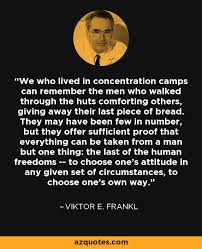
In Judaism, the concept of Tikvah (hope) is so central that it became the name of Israel’s national anthem, HaTikvah — ‘The Hope.’ Jewish theologians teach that hope is inseparable from emunah (faith) and that even in the darkest exile, God’s redemptive plan is at work. In his much celebrated book “The Search for Meaning”, Holocaust survivor and psychiatrist Viktor Frankl, drawing on his Jewish heritage, wrote that those who survived the death camps were those who found meaning — and in meaning, hope. ‘Everything can be taken from a man,’ he observed, ‘but one thing: the last of the human freedoms — to choose one’s attitude in any given set of circumstances.’
In Buddhism, hope is expressed through the concept of bodhicitta — the awakening mind — and the belief that suffering, though real, is not permanent. The Buddha’s First Noble Truth acknowledges suffering honestly; yet the Eightfold Path offers a way through it. Buddhism does not deny darkness; it provides a lantern.
In Islam, hope is considered among the most essential spiritual virtues. The Quran repeatedly reminds believers: ‘Verily, with hardship comes ease’ (Quran 94:5–6). Muslim scholars teach that despair in God’s mercy is itself a spiritual failing, because Allah’s rahma (mercy) is boundless. Hope, in Islam, is a form of trust in the Divine.
What unites these traditions is a shared, ancient conviction: human beings are not alone in their suffering, and darkness always yields to a dawn that God has prepared.
The Book of Mormon: Written for Weary Souls
In addition to these and many other traditions, there is also the additional value of scriptures such as the Book of Mormon. One of the most remarkable things about this book is that it was written specifically for people who would live in the last days — people like us, living in a world of complexity, anxiety, and rapid change. Its authors knew they were writing to a future audience who would need hope desperately. Check the following verse from this book:
“Wherefore, ye must press forward with a steadfastness in Christ, having a perfect brightness of hope, and a love of God and of all men. Wherefore, if ye shall press forward, feasting upon the word of Christ, and endure to the end, behold, thus saith the Father: Ye shall have eternal life.” — 2 Nephi 31:20
A ‘perfect brightness of hope’ — what a phrase. Not a flickering candle of hope, but a radiant, steady light. The prophet Nephi describes hope not as passive waiting, but as an active, forward-moving posture. We press forward. We feast. We endure. And in that active engagement with Christ, hope burns brightly even in the worst storms.
When We Cannot Feel Hope: The Valley of Shadow
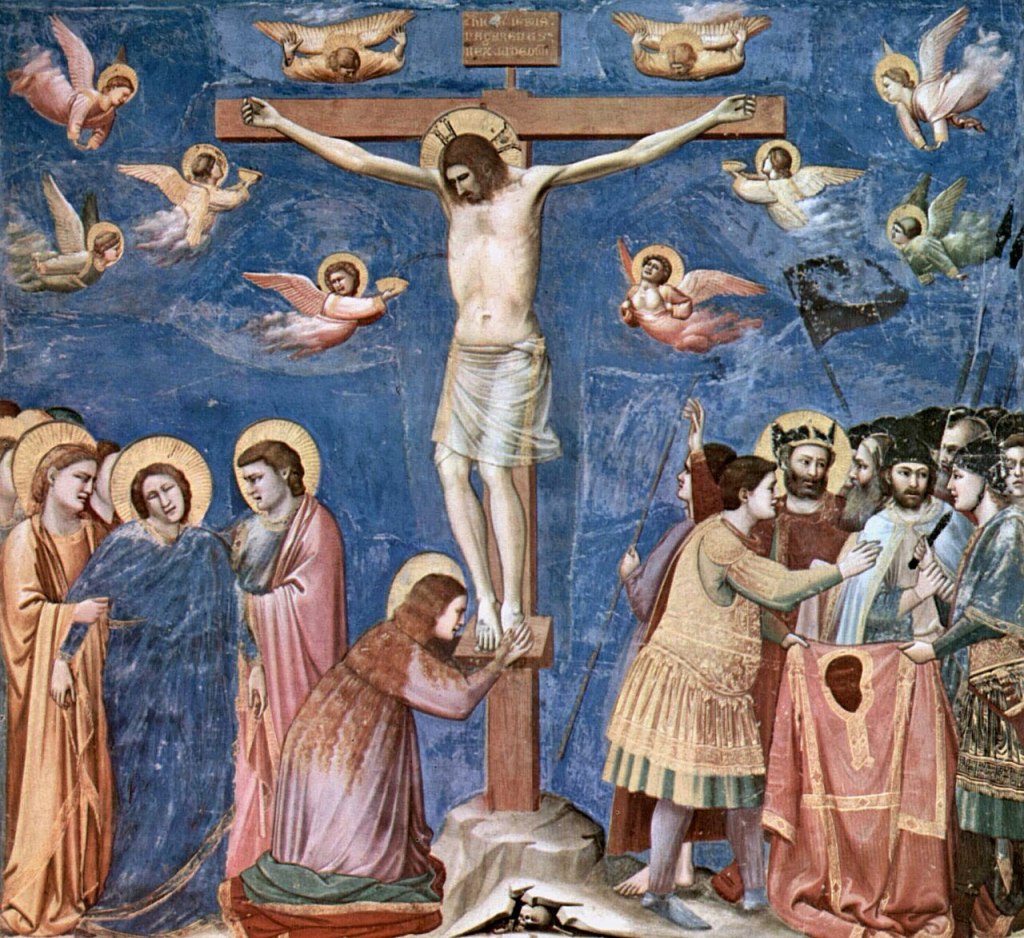
I would be remiss to write about hope without acknowledging the moments when it seems completely absent. There are times when grief is so profound, or trauma so deep, that the word ‘hope’ feels almost mocking. The Psalmist knew this place. ‘My God, my God, why hast thou forsaken me?’ he cried (Psalm 22:1) — words that the Savior Himself would echo from the cross. Even Jesus, in His greatest suffering, cried out in desolation.
Jeffrey R. Holland has spoken tenderly to those in this valley: ‘Don’t you quit. You keep walking. You keep trying. There is help and happiness ahead.’ This is the pastoral voice at its most compassionate — not minimizing pain, but insisting that God has not abandoned us in it.
Russell M. Nelson has likewise taught that joy and hope are not dependent on the absence of difficulty, but on the presence of God. ‘The joy we feel has little to do with the circumstances of our lives and everything to do with the focus of our lives,’ he has said. When our focus shifts from our suffering to our Savior, something changes — not always our circumstances, but our capacity to endure them with grace.
A True Story: The Miracle of the Martin Handcart Company
Of all the true stories that illustrate hope found in devastating circumstances, few are more powerful than that of the Willie and Martin Handcart Companies of 1856.
In the autumn of that year, nearly a thousand Latter-day Saint pioneers — many of them recently converted immigrants from England and Scandinavia — set out on foot across the American plains, pulling handcarts loaded with their belongings, bound for the Salt Lake Valley. They left late in the season. October found them stranded in the snows of Wyoming’s high plains, temperatures plunging to -11°F, their food nearly gone, their bodies failing.
People died every day. Children were buried in frozen ground. Men and women who had walked thousands of miles simply lay down and did not rise. At one crossing of the Sweetwater River, the water was chest-deep and filled with ice. Many survivors later recalled believing they would not live through the night.
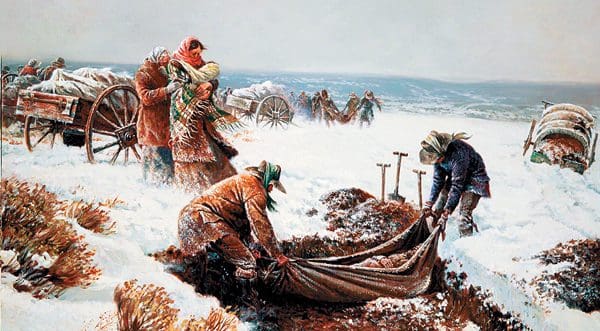
And yet — they hoped. They prayed. They sang hymns in the snow. And their prayers were heard.
When news reached Salt Lake City, Brigham Young halted a general conference session and called for immediate rescue. Within days, wagons loaded with food, blankets, and young volunteer rescuers raced eastward. When the rescue party finally reached the suffering saints, one survivor, Patience Loader Rozsa, recorded that seeing the rescuers come over the horizon felt like seeing angels. She wrote in her journal that in the darkest moment, when she had nearly given up, she felt a warmth — not of temperature, but of spirit — that she could only describe as God’s presence.
Of the approximately 1,000 who set out, some 220 died. The suffering was real and immense. But the survivors spoke for the rest of their lives about what they had found in that snow: a knowledge, burned into their souls, that God was real, that hope was real, and that they had been carried when they could no longer walk. Francis Webster, one of the survivors, would say in his old age: ‘Was I sorry that I chose to come by handcart? No. Neither then nor any minute of my life since. The price we paid to become acquainted with God was a privilege to pay.’
That is not the sentiment of someone who denied their suffering. It is the testimony of someone transformed by it — someone who found, in the most brutal circumstances imaginable, that hope was not an illusion but an anchor.
Hope as a Daily Practice
Hope is not only for catastrophic moments. It must be cultivated daily, like a garden. The Book of Mormon prophet Ether understood this:
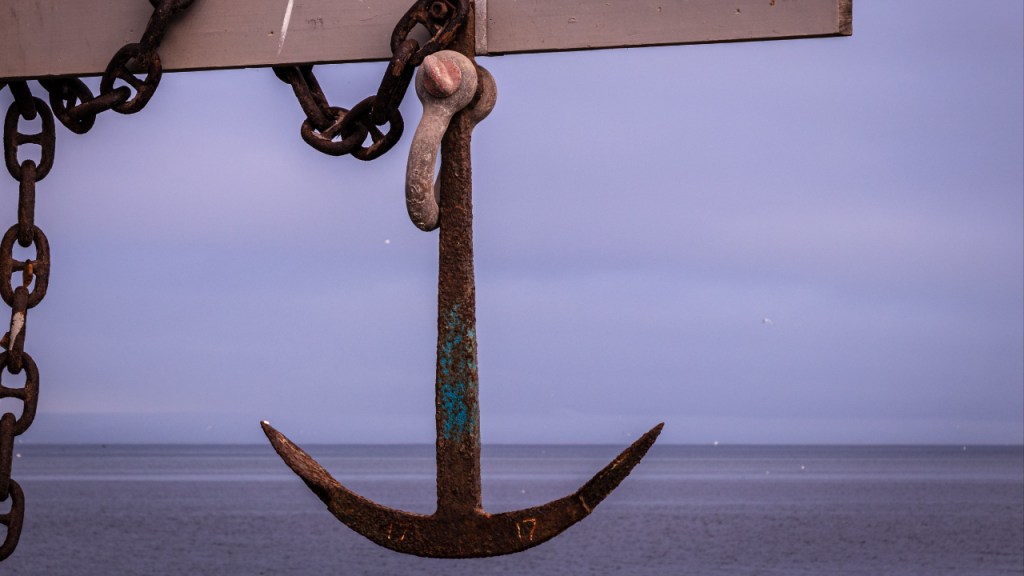
“Wherefore, whoso believeth in God might with surety hope for a better world, yea, even a place at the right hand of God, which hope cometh of faith, maketh an anchor to the souls of men.” — Ether 12:4
An anchor. That image is deliberate. Anchors are not used when the sea is calm — they are used in storms. Hope, properly understood, is not something we manufacture when life is easy. It is something we cultivate through scripture study, prayer, worship, and community so that when the storm comes — and it will come — we are already anchored.
Practical pathways to cultivating hope include: immersing ourselves in the scriptures daily, where God’s track record of faithfulness to His people is recorded in story after story; participating actively in our faith communities, where we are reminded we are not alone; serving others, because service shifts our focus outward and reveals the hope alive in those around us; and speaking openly about our struggles to trusted friends, family, and when needed, professional counselors, recognizing that seeking help is itself an act of hope.
The Resurrection: The Ultimate Ground of Hope
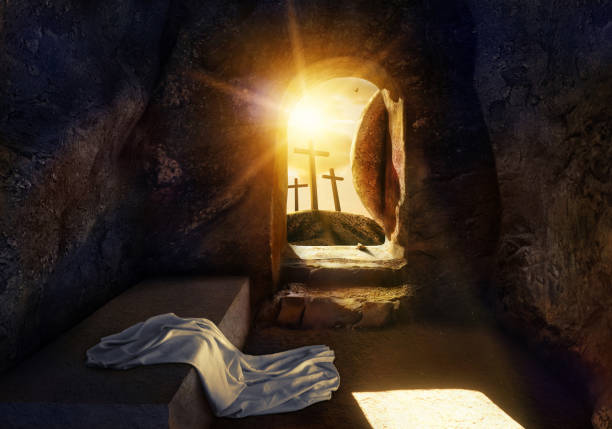
For Latter-day Saints, and indeed for all Christians, the deepest foundation of hope is the literal, physical resurrection of Jesus Christ. This is not a metaphor. This is doctrine. Christ’s empty tomb is the guarantee that death is not the final word — not for Him, and not for us.
“If in this life only we have hope in Christ, we are of all men most miserable. But now is Christ risen from the dead, and become the firstfruits of them that slept.” — 1 Corinthians 15:19–20
Because He rose, we will rise. Because He overcame, we can overcome. The Apostle Paul calls Christ the ‘firstfruits’ — the guarantee and forerunner of a resurrection that belongs to all of God’s children. Every difficulty we face in this life is temporary. Every loss is provisional. The reunion is coming. The healing is coming. That is the ultimate source of Christian hope, and it is inexhaustible.
A Word to Those Who Are Struggling Right Now
If you are reading these words in a dark season — if you are grieving, frightened, exhausted, or wondering whether God even sees you — please hear this: You are not forgotten. Your suffering is not invisible to heaven. The God who created galaxies knows your name and counts your tears (Psalm 56:8).
The Book of Mormon was written for you. The Bible was preserved for you. The testimonies of the thousands who survived their own winters of despair were recorded for you. You are not the first to sit in darkness and wonder if the morning will come. But it has always come. It will come for you.
“But they that wait upon the Lord shall renew their strength; they shall mount up with wings as eagles; they shall run, and not be weary; and they shall walk, and not faint.” — Isaiah 40:31
Press forward. Hold on. Reach out — to God, to your community, to someone who loves you. Hope is not found at the end of suffering. It is found in the middle of it, when we choose to look up. And when we look up, we find that He was looking down all along.
adf






 Mindsoulness - where mind and soul meet!
Leave a comment