
In a world that seems increasingly designed to provoke anxiety—with constant news cycles, social media comparisons, and endless demands on our time and attention—many of us find ourselves caught in spirals of worry that can feel impossible to escape. Yet within the ancient wisdom of faith traditions, and for me within the teachings of my church – The Church of Jesus Christ of Latter-day Saints, lies a profound antidote to anxiety that has transformed countless lives: the twin powers of faith and service to others.
The Paradox of Self-Focused Anxiety
Recently, LDS Apostle Patrick Kearon told an audience of young adults: ”My anxiety, far too much of the time, is about me and how I’m doing and did I make a mess of that? And that kind of thing.” This honest admission captures something essential about the nature of most anxiety. When we examine our worried thoughts closely, we often discover they circle endlessly around ourselves—our performance, our image, our fears, our failures. This inward focus creates a kind of echo chamber where concerns amplify and multiply, each worry feeding the next in an exhausting cycle.
But here’s where Elder Kearon offers a breakthrough insight: “Something I’ve learned, over and over again, is that if I think of somebody else, my anxiety lifts. I just have to think about somebody else’s well-being, and my anxiety starts to lift. In fact, it’s gone, often. And if I do something nice for somebody else, there’s just huge power in that.” This isn’t merely positive thinking or distraction—it’s a fundamental reorientation of the soul. When we shift our focus from self to others, we step outside the closed loop of self-absorption that feeds anxiety.
LDS President Thomas S. Monson taught this principle repeatedly throughout his ministry. He famously said, “When we concern ourselves more with others, there is less time to be concerned with ourselves. In the midst of the miracle of serving, there is the promise of Jesus that by losing ourselves, we find ourselves.” This teaching aligns perfectly with the Savior’s words in Matthew 16:25: “For whosoever will save his life shall lose it: and whosoever will lose his life for my sake shall find it.”

Service as Sacred Medicine
The power of service to alleviate anxiety isn’t unique to LDS teaching—it echoes across religious traditions. In Buddhism, the practice of metta (loving-kindness meditation) involves deliberately cultivating compassion for others as a path to inner peace. The Dalai Lama has observed that “if you want others to be happy, practice compassion. If you want to be happy, practice compassion.” In Islam, the concept of sadaqah (charitable giving and acts of kindness) is considered not only a duty but a source of spiritual purification and peace. The Prophet Muhammad taught that “charity does not decrease wealth.”
In Jewish tradition, the concept of tikkun olam—repairing the world—suggests that our purpose extends beyond personal salvation to healing the brokenness we see around us. This outward focus naturally diminishes the grip of self-centered worry. Similarly, in many Christian teachings, the commandment to “love thy neighbor as thyself” (Mark 12:31) implies that healthy self-love naturally expands to encompass others, creating a generous spirit that has little room for anxiety.
What makes this principle so powerful is that it’s immediately actionable. We don’t need to wait for our circumstances to change or for our feelings to shift. We can, in this very moment, think of someone who might need encouragement, reach out to a struggling friend, or perform a simple act of kindness. And in that moment of genuine concern for another, anxiety often dissolves like morning mist.

A True Story: Sarah’s Discovery
Sarah Mitchell (name changed for privacy) was a Relief Society president in a suburban church congregation. A perfectionist by nature, she worried constantly about whether she was serving adequately, whether sisters in the ward felt cared for, whether her family was suffering because of her calling, and whether she was measuring up to previous presidents. The irony wasn’t lost on her—she was anxious about her service in a calling meant to serve others.
One evening, after a particularly difficult day where she’d missed an important visit because she’d mixed up her calendar, Sarah sat in her car in the church parking lot and wept. She felt like a failure. The anxiety was so intense she considered asking to be released. Then her phone rang. It was Sister Chen, an elderly widow in the ward whom Sarah had been meaning to visit for weeks but hadn’t found time for.
“Sarah, dear,” Sister Chen said, “I’ve been thinking about you today. I felt impressed that you might need some encouragement. I want you to know that you’re doing a wonderful job, and the Lord knows your heart.” They talked for twenty minutes, with Sister Chen—the one who should have been receiving care—ministering to Sarah.
The experience shook Sarah. Here she’d been so consumed with her own adequacy that she’d failed to see the actual needs around her. More importantly, when she’d been on the receiving end of Sister Chen’s service, she’d felt her anxiety lift completely. It occurred to her that perhaps she’d been robbing others of the same blessing by not allowing herself to be served, and by making her service about her own performance rather than genuine connection with others.
Sarah began a new practice. Whenever she felt anxiety rising, she would stop and pray for someone else by name—not for her own calling or responsibilities, but genuinely for someone else’s wellbeing. Then, when possible, she would act on whatever impression came. Sometimes it was a text message. Sometimes a phone call. Sometimes delivering cookies or offering practical help. The results were remarkable. Her anxiety didn’t disappear entirely, but it lost its grip on her. She found herself sleeping better, smiling more, and paradoxically, serving more effectively because she was less focused on her own performance.

Understanding Faith in a Physical World
In reflecting on all this, I came across the following statement by Dieter F. Uchtdorf, which addresses a deeper challenge: “Sometimes it’s not easy to develop faith in spiritual things while living in a physical world. But it is worth the effort because the power of faith in our lives can be profound.” This speaks to the fundamental tension of mortality—we are spiritual beings having a physical experience, and the immediate, tangible nature of physical reality can make spiritual realities feel distant or abstract.
The scriptures teach us remarkable things about faith’s power: “through faith the worlds were framed, waters were parted, dead were raised, and rivers and mountains were moved from their course.” Hebrews 11, often called the “faith chapter,” recounts miracle after miracle accomplished through faith. Yet this catalog of wonders can sometimes deepen our confusion when our own faithful prayers seem to go unanswered.
Uchtdorf added: ”Yet some might ask, ‘If faith is so powerful, why can’t I receive an answer to a heartfelt prayer? I don’t need a sea to part or a mountain to move. I just need my illness to go away or my parents to forgive each other or an eternal companion to appear on my doorstep with a bouquet of flowers in one hand and an engagement ring in the other.’” This question is profoundly honest and relatable. Most of us don’t need dramatic Old Testament miracles—we need healing in our relationships, relief from pain, solutions to seemingly intractable problems.

The Boundaries of Faith
The answer Elder Uchtdorf provided is both comforting and challenging: “Faith is powerful, and often it does result in miracles. But no matter how much faith we have, there are two things faith cannot do. For one, it cannot violate another person’s agency.” This principle is fundamental and echoes across many faith traditions. In Christian thought generally, free will is considered so sacred that God Himself will not violate it. Even in His infinite power and perfect love, He allows us to choose, even when those choices cause pain to ourselves and others.
This means that no amount of faith can force an estranged parent to forgive, compel an absent spouse to return, or make an employer give us the job we desire. The painful truth is that much of our suffering comes not from our own choices but from the choices of others—and faith cannot override their agency. This limitation isn’t a weakness of faith but a reflection of a higher principle: the eternal importance of choice.
Moreover, according to Elder Uchtdorf, ”The second thing faith cannot do is force our will upon God. We cannot force God to comply with our desires—no matter how right we think we are or how sincerely we pray.” This is perhaps even harder to accept. We want to believe that if we pray sincerely enough, faithfully enough, with pure enough intent, God will grant our righteous desires. But this would reduce prayer to a formula and God to a vending machine—insert enough faith, receive desired outcome.
Paul’s Thorn and the Greater Purpose
The example of Paul, as related by Uchtdorf, is instructive: “Consider the experience of Paul, who pleaded with the Lord multiple times for relief from a personal trial—what he called ‘a thorn in the flesh.’ But that was not God’s will. Eventually, Paul realized that his trial was a blessing, and he thanked God for not answering his prayers the way he had hoped.” In 2 Corinthians 12:7-10, Paul describes how he besought the Lord three times to remove this affliction, whatever it was (scholars have debated its nature for centuries). The Lord’s response was not removal but reassurance: “My grace is sufficient for thee: for my strength is made perfect in weakness.”
Paul’s response shows spiritual maturity: “Most gladly therefore will I rather glory in my infirmities, that the power of Christ may rest upon me.” He came to see that what he’d viewed as an obstacle was actually an opportunity for divine grace to work in his life in ways that wouldn’t have been possible otherwise. This doesn’t mean God causes our suffering, but that He can consecrate it for our growth.
This perspective appears in other traditions as well. In Islamic thought, sabr (patient perseverance) in the face of trials is considered a form of worship. The Quran states, “Indeed, Allah is with the patient” (2:153). In Hinduism, the concept of karma yoga teaches that we should focus on our actions rather than their fruits, surrendering the outcomes to divine wisdom. These traditions recognize that our limited perspective cannot always comprehend the purposes of a divine plan.

Redefining Faith’s Purpose
“No, the purpose of faith is not to change God’s will but to empower us to act on God’s will.” Elder Uchtdorf added.”Faith is trust—trust that God sees what we cannot and that He knows what we do not.” This reframing is revolutionary. Faith isn’t a tool to bend reality to our preferences; it’s a means of aligning ourselves with a higher reality. It’s trust that operates even in the absence of understanding, even when outcomes don’t match our desires.
”Doubt your doubts before you doubt your faith.” This counsel from Elder Uchtdorf acknowledges that doubt is natural, especially when prayers seem unanswered, but encourages us to question our skepticism with at least the same vigor we question our belief. Faith, in this light, becomes not the absence of questions but the decision to trust God’s character even when we don’t understand His methods.
In practical terms, this kind of faith transforms how we approach anxiety-producing situations. Instead of demanding that God remove our difficulties, we can ask for the strength to endure them, the wisdom to learn from them, and the grace to see His hand in our lives even in hard moments. We can pray for faith to trust that He’s weaving our experiences—even the painful ones—into something meaningful.
The Intersection of Service and Faith
These two principles—service to others and faith in God—are not separate paths to peace but intertwined realities. When we serve others, we act on faith that God will care for us while we care for His children. When we exercise faith, we often find ourselves prompted to serve in ways we wouldn’t have imagined. Together, they create a virtuous cycle that lifts us out of anxiety’s grip.
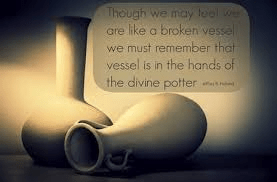
Jeffrey R. Holland spoke powerfully about mental health challenges, including anxiety, in his talk “Like a Broken Vessel.” He acknowledged that these struggles are real and sometimes require professional help, but he also testified that “the Lord will never forsake us.” This compassionate approach recognizes that faith doesn’t mean denying our struggles or feeling guilty for them, but trusting that God walks with us through them.
The beauty of combining service with faith is that service gives faith tangible expression. We may not be able to control whether our prayers are answered as we hope, but we can always control whether we reach out to comfort someone else in their need. And often, in blessing others, we find ourselves blessed in ways we didn’t anticipate. Our anxiety about our own situation diminishes as we engage meaningfully with others’ experiences.
Practical Steps Forward
For those struggling with anxiety, the path forward might include these elements: First, when anxiety strikes, pause and pray for someone else by name. Ask God to bless them according to their needs. Second, take a small action of service—send an encouraging text, make a phone call, offer practical help. Notice how this shifts your internal focus. Third, practice faith by surrendering outcomes to God rather than demanding specific results. Write down prayers and revisit them later to see how God has worked in unexpected ways.
Fourth, build community. Seek for mutual service and support. Engage with your friends, acquaintances, and family, accept help when offered, and offer help in return. In isolation, both anxiety and faithlessness grow; in community, they thrive. Fifth, remember that faith develops over time through repeated experiences of God’s faithfulness. Keep a journal of tender mercies, small miracles, and answered prayers—even when the answer was “no” or “wait” but you later saw the wisdom in it.
Finally, be patient with yourself. As Sarah discovered in her journey, transformation doesn’t happen overnight. Some days the anxiety will win. Some days faith will feel distant. But over time, as we consistently turn outward in service and upward in trust, we’ll find ourselves changing. The anxiety that once dominated our thoughts will occupy less and less space. We’ll discover, as countless faithful people have before us, that in losing ourselves in service and surrendering our will to God’s wisdom, we find the peace that truly does pass all understanding.
The invitation is simple but profound: Try it. The next time anxiety threatens to overwhelm you, think of someone else. Pray for them. Serve them if you can. Trust that God sees what you cannot see and knows what you do not know. And watch as peace, perhaps slowly but surely, begins to dawn in your heart. This is the promise of the gospel—not that life will be easy or that all our prayers will be answered as we hope, but that we are never alone, that our lives have profound purpose, and that in serving God’s children and trusting His plan, we find the peace we’ve been seeking all along.
adf







 Mindsoulness - where mind and soul meet!
Leave a comment