I visited Bondi Beach in Sydney in February this year. It is a breathtaking place with beautiful sand and a marvellous walk around the coast. I am grateful to my daughter Grace, who took me there. The beach was full of life and visitors. Many tourists like me were walking the various paths, while many residents were sunbathing or swimming in the gorgeous water. My daughter, who lives in Sydney, spends time on Bondi Beach. She feels at peace there and takes time to write her thoughts in her personal journal. As I was looking at some of the pictures I took there, my mind rushed to the tragic events of a few weeks ago when two terrorists opened fire and killed several Jewish people who were attending a peaceful Hanukkah event there. The innocence of that beautiful place was shattered, and Bondi Beach will never feel the same.

My church has also been the target of hate recently. One of our chapels in the United States was attacked by a man while its members were worshipping, killing 10 people and burning the chapel to the ground. Another LDS chapel in the Dominican Republic was invaded by a deranged individual who sprayed a caustic chemical agent on members of the congregation. Luckily, nobody died or was seriously injured.
Questions have been coming to mind over the last few months. Why? Why is this happening? What are the reasons? And while I am sure we can find several of those reasons – reasons that may have created or are creating the conditions for hate and resentment – we seem to have forgotten, and we are certainly missing an important virtue of our humanity: forgiveness.
Forgiveness stands as one of the most profound and challenging virtues we can cultivate in our mortal journey. It is far more than simply overlooking mistakes or letting go of resentments—it is a divine gift that liberates both the forgiver and the forgiven. When we choose to forgive, we free ourselves from the exhausting burden of reliving hurt repeatedly, breaking the cycle of pain that can consume our thoughts and poison our hearts. This release doesn’t minimize the wrong that was done or pretend that injustice never occurred. Rather, forgiveness brings a generosity of spirit that allows us to release our grip on the offense, trusting that justice and healing belong ultimately in God’s hands. As we embrace this sacred principle, we discover that forgiveness can heal even the most grievous offenses, offering a blessed opportunity for a clean start that seemed impossible in our darkest moments.
From my perspective, forgiveness is not merely a good suggestion but a divine commandment central to our covenant relationship with God. The Savior Jesus Christ taught, “I, the Lord, will forgive whom I will forgive, but of you it is required to forgive all men” (Doctrine and Covenants 64:10). This remarkable scripture places the responsibility of forgiveness squarely on our shoulders, regardless of the severity of the offense. Spencer W. Kimball, a former president of my church, taught that “we must forgive even though people never repent, or admit their wrong, or ask for forgiveness.” This higher law challenges us to rise above our natural inclination toward retribution and to instead mirror the Saviour’s infinite capacity for mercy. Through the Atonement of Jesus Christ, we are empowered to do what seems humanly impossible—to forgive as we have been forgiven.

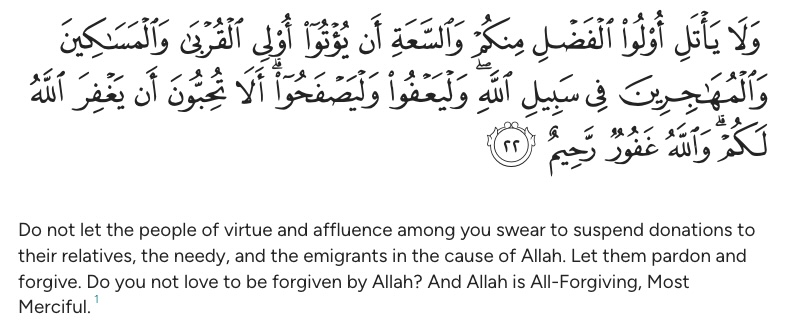
The concept of forgiveness resonates across virtually all religious traditions, revealing its universal importance to the human experience. In Christianity broadly, Jesus’s teachings on forgiveness permeate the gospels, from the Sermon on the Mount where He instructs us to turn the other cheek, to His profound words from the cross: “Father, forgive them; for they know not what they do” (Luke 23:34). In Islam, forgiveness is considered one of the attributes of Allah, and Muslims are encouraged to forgive others as an act of piety and mercy. The Quran states, “Let them pardon and overlook. Would you not like that Allah should forgive you?” (24:22). Judaism teaches the importance of both seeking and granting forgiveness, particularly during Yom Kippur, the Day of Atonement, when Jews seek reconciliation with both God and their fellow human beings. Buddhism emphasizes forgiveness as essential to ending suffering and achieving inner peace, teaching that holding onto anger is like grasping a hot coal—we are the ones who get burned.
Accepting divine forgiveness is also very important as it transforms our hopeless guilt into resolve, offering us a path forward when we feel trapped by our own mistakes. Many people find it easier to forgive others than to accept God’s forgiveness for themselves, carrying unnecessary burdens of shame long after repentance. The LDS concept of repentance provides a beautiful framework for understanding divine forgiveness: through sincere recognition of wrongdoing, genuine sorrow, confession, restitution where possible, and forsaking sin, we can access the cleansing power of Christ’s Atonement. Jeffrey R. Holland reminded us that “the Lord Jesus Christ, the Redeemer of us all, gave His life to provide help and hope to people who face troubles in their lives.” When we truly accept that Christ has already paid the price for our sins, our guilt transforms from a crushing weight into motivation for positive change. We no longer need to punish ourselves endlessly; instead, we can move forward with faith and determination to become better.
Self-forgiveness represents one of the most difficult yet essential aspects of the forgiveness journey. We often hold ourselves to impossible standards, replaying our mistakes in an endless loop of self-condemnation. Self-forgiveness moves us forward, ready to do things differently, with compassion for ourselves and faith that we can change. Dieter F. Uchtdorf taught, “We are all at different stages along the path. If it seems slow going, take heart—you’re moving in the right direction.” This perspective acknowledges our imperfection while maintaining hope in our capacity for growth. When we practice self-forgiveness, we’re not excusing our behavior or avoiding accountability; rather, we’re choosing to extend to ourselves the same mercy that God offers us. We recognize that we are works in progress, that mistakes are part of mortality’s curriculum, and that every day offers a new opportunity to align our actions with our values.
A powerful example of forgiveness comes from the true story of Chris Williams, who experienced unimaginable tragedy in 2007. While driving home from an activity with his family in Wyoming, a teenage driver who was intoxicated crossed the center line and crashed head-on into their vehicle. In an instant, Chris lost his pregnant wife, his nine-year-old daughter, and his eleven-year-old son. His other son was critically injured. In the immediate aftermath, while still trapped in the wreckage and processing the devastating reality of his loss, Chris made a conscious decision to forgive the young man who had caused the accident. He later explained that he felt a clear prompting that he had a choice: he could spend the rest of his life consumed by hatred and bitterness, or he could choose to forgive. He chose forgiveness, not because the offense was small—it was catastrophic—but because he understood that harboring resentment would only multiply his suffering and dishonor the memory of his loved ones.
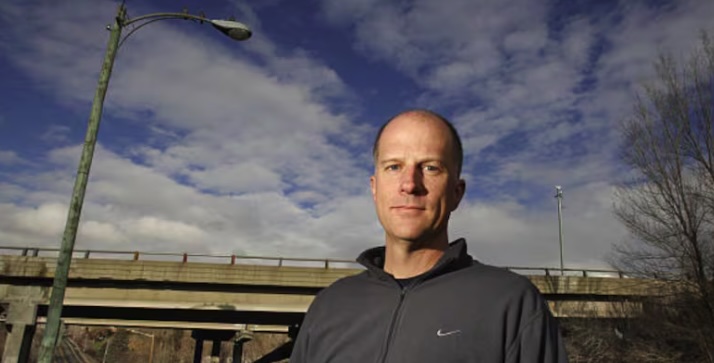
Chris Williams’s decision to forgive didn’t happen instantly or easily, nor did it mean there were no legal consequences for the driver. Rather, his forgiveness was a process that unfolded over time, sustained by his faith in Jesus Christ and his understanding of the Saviour’s Atonement. He reached out to the young man and his family, offering them compassion during what was certainly their darkest hour as well. Chris later wrote a book titled “Let It Go: A True Story of Tragedy and Forgiveness” and has spent years sharing his story to help others understand the liberating power of forgiveness. His experience demonstrates that forgiveness is not about forgetting, minimizing tragedy, or avoiding justice—it’s about choosing not to let the offense define the rest of your life. It’s about trusting God to heal what seems broken beyond repair and believing that somehow, meaning can emerge from suffering.
The Williams family’s story illustrates how forgiveness opens the door of hope, creating space for healing that seemed impossible. When we refuse to forgive, we remain chained to the past, perpetually imprisoned by events we cannot change. Buddhist teacher Jack Kornfield describes unforgiveness as “drinking poison and expecting the other person to die.” This vivid metaphor captures the self-destructive nature of holding grudges—we are the primary victims of our own bitterness. Conversely, when we choose forgiveness, we reclaim our power and redirect our energy toward healing and growth. This doesn’t mean we trust irresponsibly or place ourselves in harm’s way; healthy boundaries and forgiveness can coexist. What changes is our internal state: instead of being consumed by anger and rehearsing revenge scenarios, we can focus on rebuilding our lives and nurturing relationships that matter.
In my Faith understanding of forgiveness is deeply connected to temple worship and eternal families. In the temple, we make covenants to love, serve, and forgive one another, recognizing that our eternal progression depends on our ability to maintain harmonious relationships. Grudges and unresolved conflicts create barriers not only in our mortal associations but potentially in our eternal ones as well. James E. Faust taught, “Without forgiveness, there is no real love. Love is an act of endless forgiveness.” This principle takes on heightened significance when we consider that family relationships are intended to continue beyond death. How can we hope to dwell together in celestial glory if we refuse to forgive each other here? The very ordinances of salvation and exaltation require pure hearts, and nursing grievances pollutes our spiritual vessels, making us unfit for the divine presence we seek.

Forgiveness ultimately points us toward the character of God Himself and invites us to become more like Him. The parable of the unmerciful servant in Matthew 18 powerfully illustrates this principle: a servant who owed an enormous debt to his king was forgiven completely, yet immediately went out and had a fellow servant imprisoned for a comparatively tiny debt. When the king learned of this, he was justly angry, asking, “Shouldest not thou also have had compassion on thy fellow servant, even as I had pity on thee?” The message is clear: having received infinite mercy from God, we are obligated to extend mercy to others. D. Todd Christofferson explained, “The Lord will not accept an unforgiving heart, for to be forgiven we must also forgive.” This is not because God is vindictive, but because an unforgiving heart has not truly comprehended or accepted divine grace. When we understand how much we have been forgiven, how can we withhold forgiveness from others?
In our journey through mortality, we will inevitably face situations that test our capacity to forgive—both others and ourselves. Some offenses will seem minor, easily released with a sincere apology. Others will cut so deeply that forgiveness feels like an impossible demand, a betrayal of ourselves or our loved ones. In these moments, we must remember that forgiveness is not a single act but a process, sometimes requiring years of prayer, tears, and reliance on divine strength beyond our own. It may help to remember that forgiveness is ultimately an act of faith—faith in Christ’s Atonement to heal all wounds, faith in God’s justice to right all wrongs, and faith that choosing mercy over revenge will lead to peace rather than regret. As we open our hearts to this transformative principle, we discover that forgiveness truly does open the door of hope, ushering us into a future unburdened by the past and radiant with the possibility of healing, growth, and eternal progression. Through Christ, the impossible becomes possible, and we find that in releasing others, we have freed ourselves.
May we all be more forgiving in the New Year and learn the true value of Christmas, understanding that it is first and foremost about the birth and mission of the Master Forgiver, the One who gave His all to all of us individually. The more we forgive, the better our communities will live and be.
ADF








 Mindsoulness - where mind and soul meet!
Leave a comment